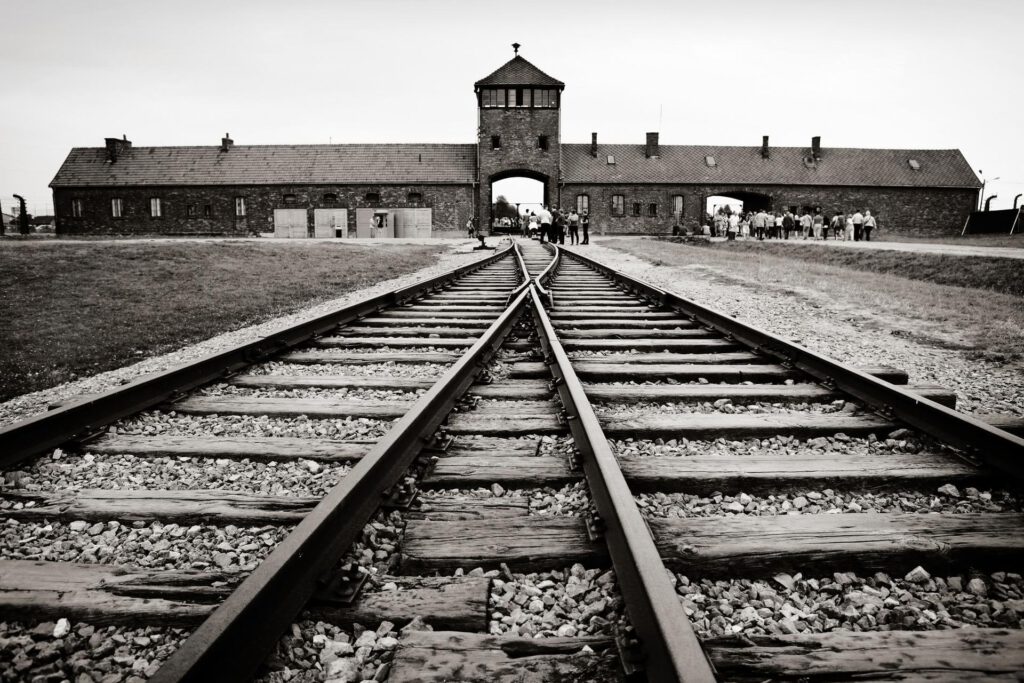

Auschwitz-Birkenau – Europe’s Largest Nazi German Concentration and Extermination Camp
Auschwitz-Birkenau – Europe’s Largest Nazi German Concentration and Extermination Camp
KL Auschwitz (1940–1945) was the largest of the Nazi German concentration and extermination camps and the central site of the immediate annihilation of Jews. It was one of six such camps established by Nazi Germany on occupied Polish territory.
For the world, Auschwitz became a symbol of terror, genocide, and the Holocaust. The camp was founded by the Nazis in mid-1940 on the outskirts of the Polish town of Oświęcim, which was annexed to the Third Reich.
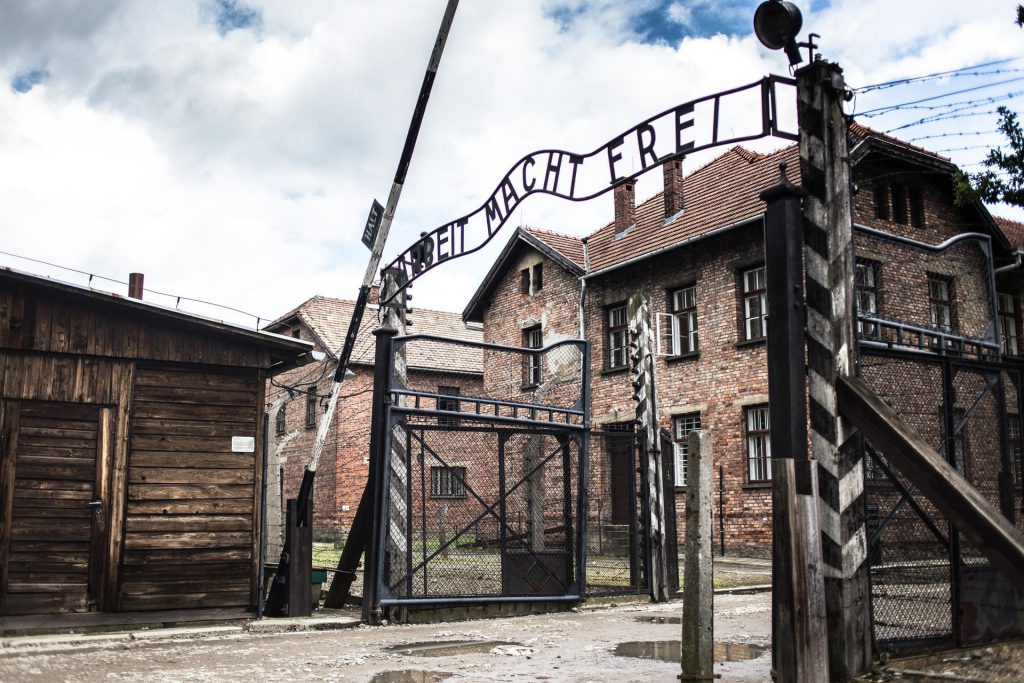
The gate of Auschwitz I, bearing the infamous inscription “Arbeit macht frei,” remains one of the most recognisable symbols of the camp system.
The Creation of the Camp
The immediate reason for establishing Auschwitz was the overcrowding of prisons and the growing number of arrested Poles. Initially, the camp was intended to function like other concentration camps created within the Third Reich during the 1930s, and it retained this function throughout its five years of operation.
In 1942, however, Auschwitz was transformed into a key centre of the “Endlösung der Judenfrage” – the so-called Final Solution of the Jewish Question – the Nazi plan to murder all Jews living in territories occupied or controlled by the Third Reich.
In 1944, the camp complex reached the peak of its operation and consisted of three main parts:
Auschwitz I, established in 1940 in buildings that had previously served as Polish army barracks before the Second World War.
Auschwitz II–Birkenau, the largest camp of the entire camp complex, established in 1941 on farmland in the village of Brzezinka, located about two kilometres from Auschwitz I. The local Polish population was forcibly displaced and their homes demolished. It was here, in Birkenau, that the Nazis constructed most of the facilities used for mass murder.
Auschwitz III–Monowitz. Between 1942 and 1944, approximately fifty smaller subcamps were created to exploit prisoner labour in German industrial plants as well as agricultural enterprises. The largest of these in 1943 was Lager Buna, located six kilometres from Auschwitz I and established in 1942 near the Buna-Werke factory.
The Camp and Its Surroundings
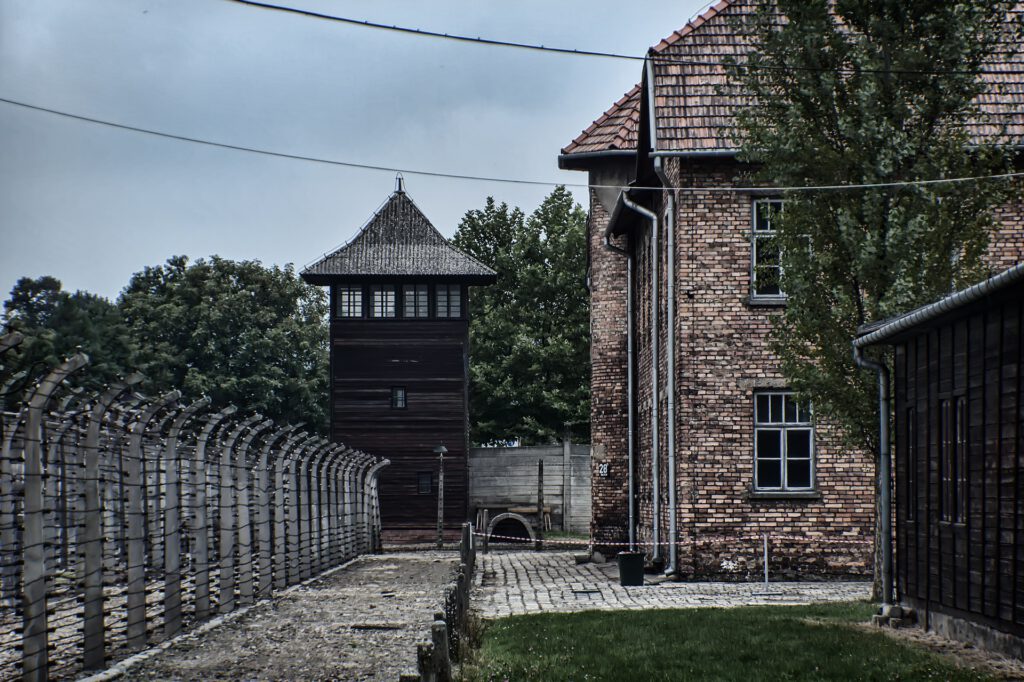
The entire camp complex and all subcamps were separated from the outside world by barbed wire. However, the area administered and controlled by the SS extended far beyond the fences, covering approximately 40 square kilometres around Auschwitz and Birkenau.
The Polish and Jewish populations living near the camps were forcibly displaced. Some of their houses were demolished, while others were occupied by SS personnel and their families. Just outside the camps were workshops, offices, and warehouses belonging to the camp administration.
The Extermination
Initially, the largest group of prisoners consisted of Poles, particularly between 1940 and 1941. The first transport of Polish prisoners arrived at KL Auschwitz on 14 June 1940 from the prison in Tarnów. From the very beginning of the war, the German occupation authorities pursued a policy aimed at destroying the Polish nation, weakening its intellectual elite, and enforcing absolute obedience. As a result, prisons, detention centres, and camps – especially concentration camps – played a central role in this system of terror.
Those imprisoned included people arrested in street round-ups, members of the intelligentsia, hostages taken in retaliation for resistance activities, the mentally ill, the incurably sick, people with disabilities, and later also residents of Warsaw captured during the Warsaw Uprising in 1944.
Jews who were initially imprisoned in Auschwitz between 1940 and 1941 were held under the same regulations as other prisoners, usually for violating Nazi decrees. From the spring of 1942 onward, everything changed. Jews began arriving in separate transports, and Auschwitz became the principal site for implementing the Final Solution.
Jews were deported to Auschwitz from territories annexed to the Third Reich, from all Nazi-occupied lands, and from countries allied with Nazi Germany. Among them, Hungarian Jews formed the largest group, followed by Jews from Poland, Protectorate of Bohemia and Moravia, Slovakia, France, the Netherlands, Belgium, The Third Reich, Austria, Italy, and Norway.
Jews were subjected to the most extreme brutality. Considered by the Nazis to have no value whatsoever, they fell victim to hunger, cold, disease, exhausting labour, beatings, phenol injections to the heart, and medical experiments. Those deemed fit for work were exploited as forced labour, contributing to the expansion of the camp and to German industry. The majority, however, were murdered in gas chambers.
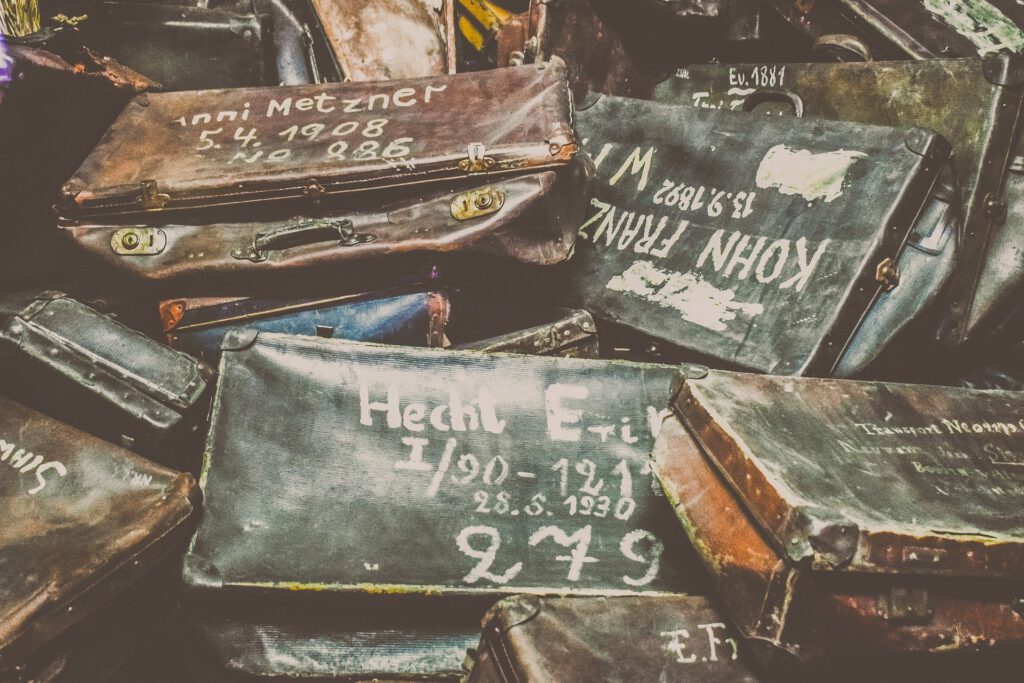
From mid-1942 onward, the number of deported Jews increased rapidly. In 1942 alone, approximately 197,000 Jews were deported to Auschwitz; in 1943, about 270,000; and in 1944, as many as 600,000. In total, around 1.1 million Jews were deported to Auschwitz, of whom only about 200,000 were selected for forced labour. At the same time, approximately 160,000 Poles, Roma, Belarusians, Ukrainians, Czechs, French, and people of other nationalities, as well as several thousand Soviet prisoners of war, were imprisoned in the camp.
Liberation
The evacuation and liquidation of KL Auschwitz was a carefully planned and well-organised operation. From August 1944 onward, approximately 65,000 prisoners were evacuated to the Third Reich, where they were forced to work in support of the Nazi war machine.
At the same time, the camp administration began systematically destroying evidence of Nazi crimes. Looted Jewish property was hastily removed.
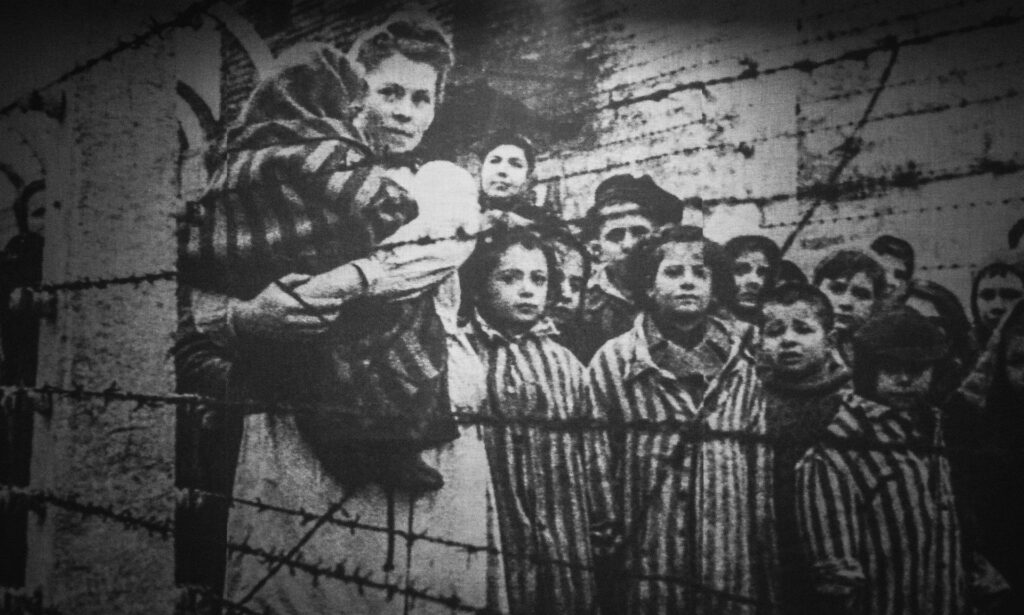
KL Auschwitz was liberated on 27 January 1945 by the Soviet Red Army. Prisoners welcomed the soldiers as true liberators, fully aware of the historic significance of that day. Paradoxically, soldiers representing one totalitarian regime liberated victims of another.
In the final days before liberation, several hundred prisoners died or were murdered by the Nazis.
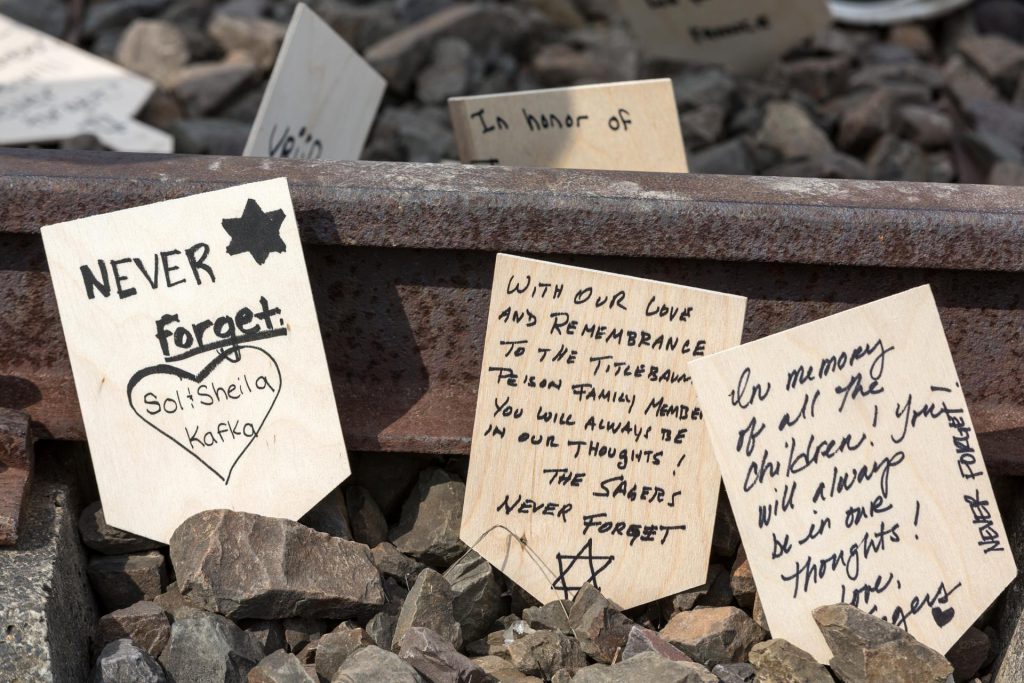
Today, the Auschwitz-Birkenau Memorial and Museum preserves the site as a place of remembrance, education, and warning for future generations.
Here you can find the Auschwitz Birkenau Museum website in English.
Click here to see why a visit to the museum is a must and to book a guided tour of Auschwitz Birkenau with us.