Collegium Maius – The Heart of Poland’s Oldest University
Collegium Maius – The Heart of Poland’s Oldest University
If you are visiting Kraków, a stop at Collegium Maius and the surrounding university quarter is essential. This is where Poland’s oldest university, the Jagiellonian University, is located. Founded in 1364 by King Casimir the Great, the institution was originally known as the Kraków Academy and carried that name until the 19th century.
The Courtyard and the Gothic College
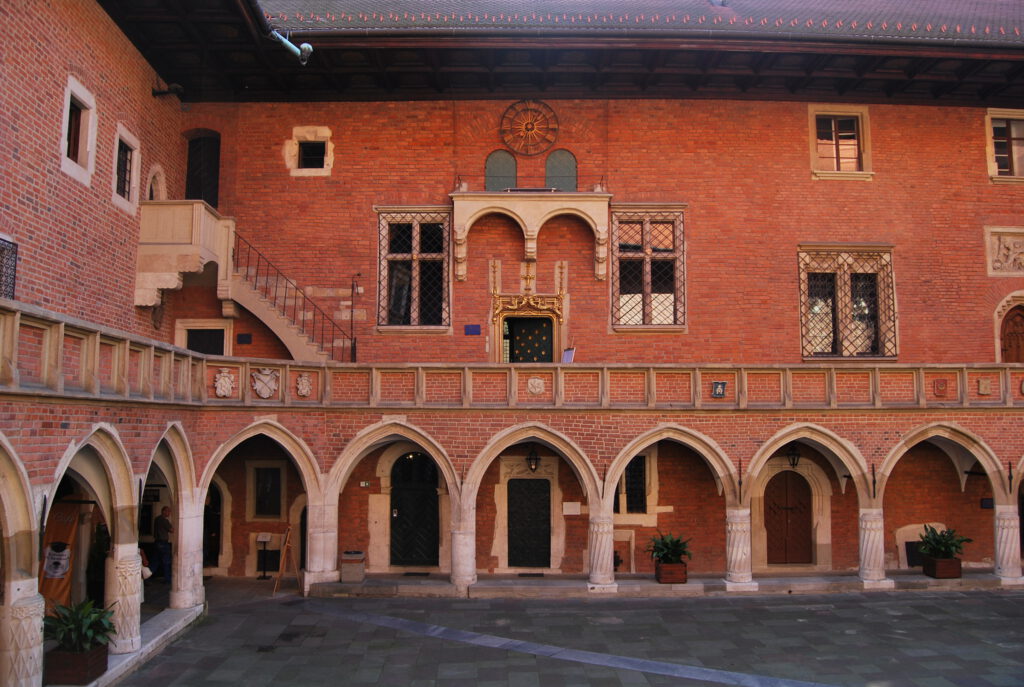
One of the oldest university buildings is Collegium Maius, a magnificent example of Gothic architecture. The name, translated from Latin, means “The Great College.” The building stands at the corner of St. Anne Street and Jagiellonian Street, slightly hidden from the bustle of the Main Market Square.
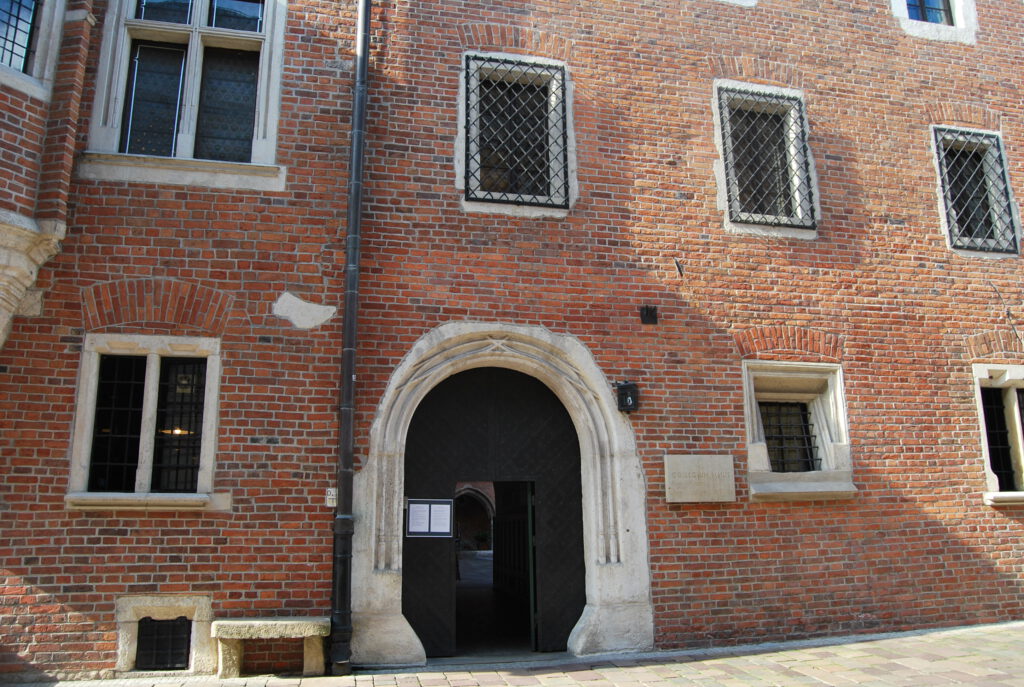
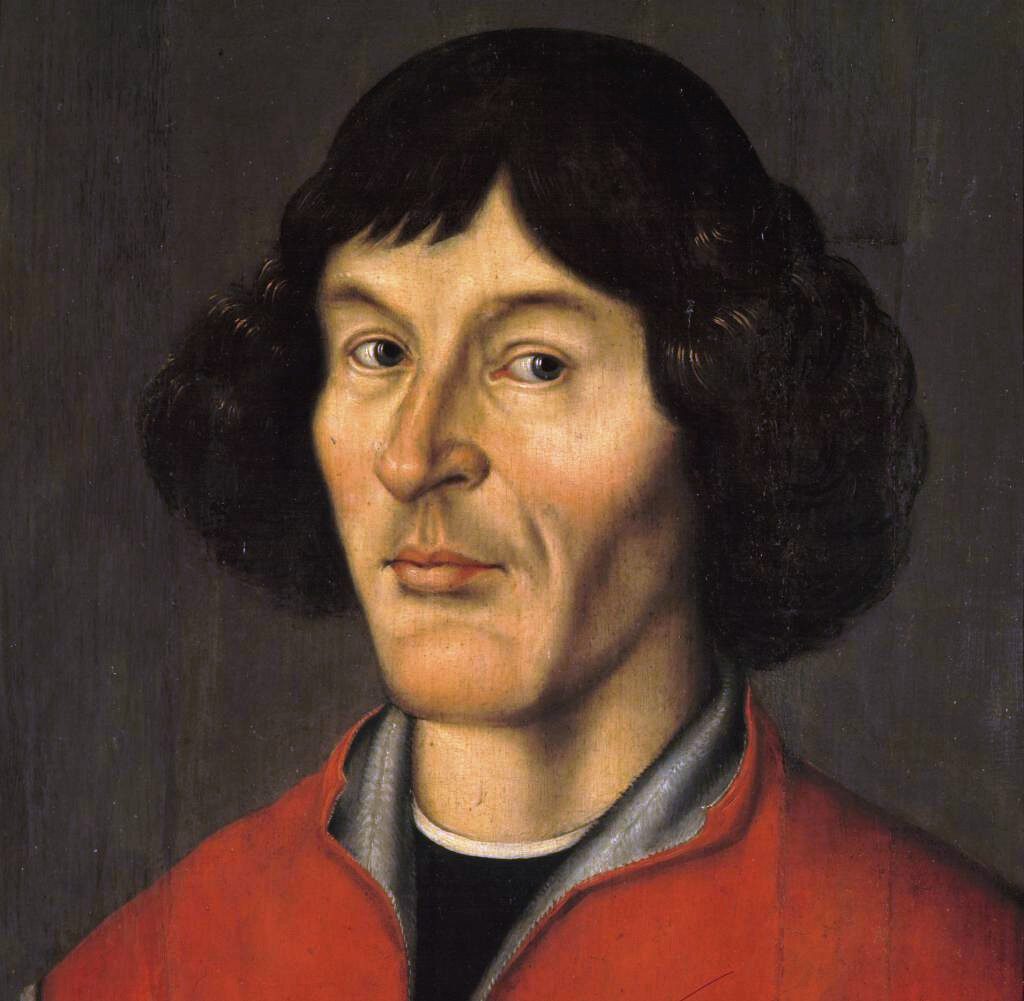
The original building was donated to the Academy around the year 1400 by King Władysław Jagiełło. The elegant Gothic form we see today is largely the result of a major reconstruction carried out in the 16th century, during a period when the university was particularly renowned for research in mathematics and astronomy. It was precisely at that time that Nicolaus Copernicus – the astronomer who formulated the heliocentric model of the universe – studied here.
A Place of Learning and Daily Life
Collegium Maius was designed as a multifunctional academic space. The ground floor served primarily as lecture halls, while the first floor housed the library, the university treasury, and a common hall for professors. Professors’ living quarters occupied both the first and second floors.
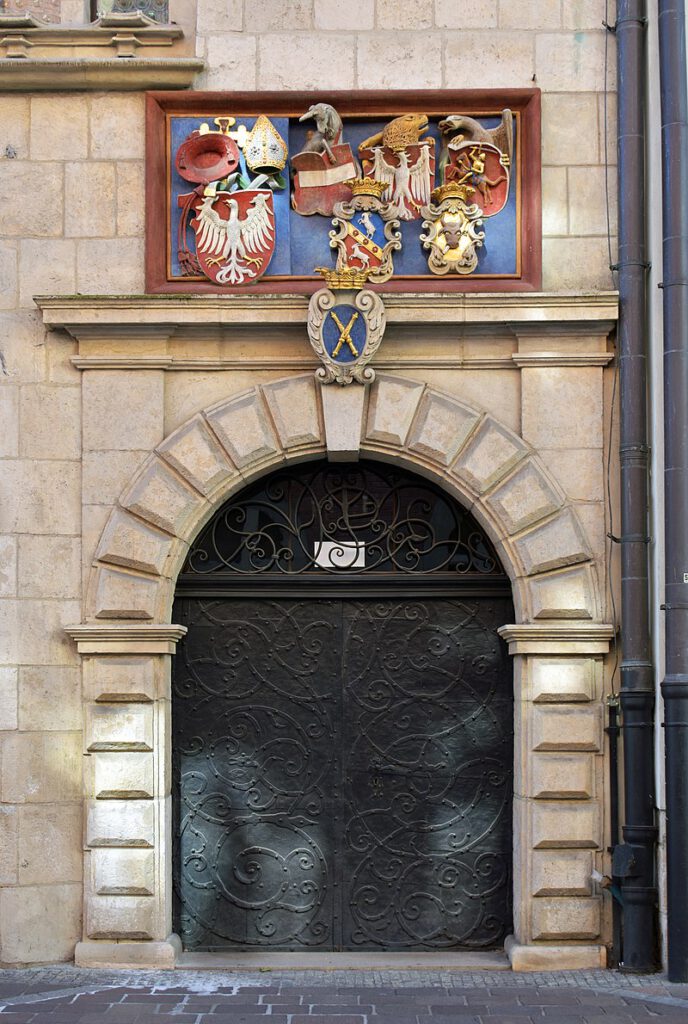
In the 19th century, the institution officially adopted the name Jagiellonian University, honouring the Jagiellonian dynasty, which played a crucial role in the university’s development during the 15th and 16th centuries. Until 1940, Collegium Maius also served as the seat of the Jagiellonian Library.
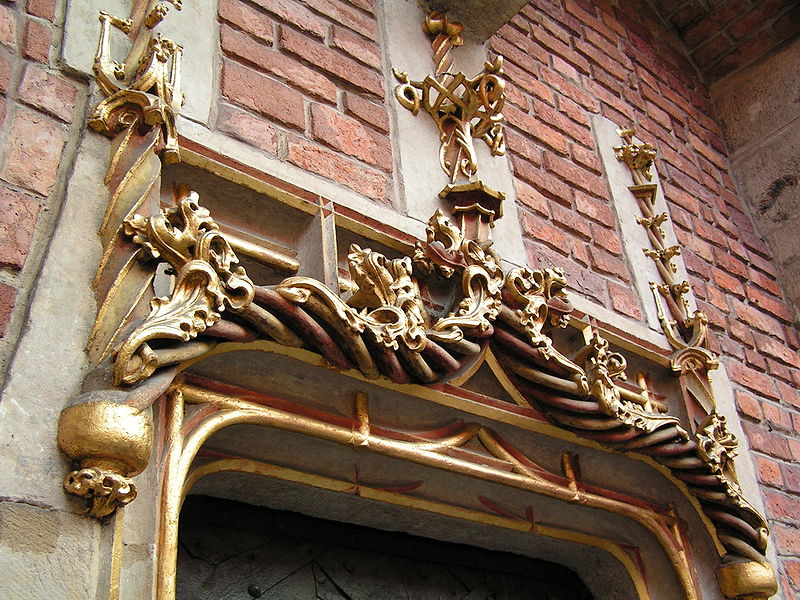
Among the university’s most distinguished alumni are not only Nicolaus Copernicus, but also Pope John Paul II and Nobel Prize–winning poet Wisława Szymborska.
A Living Academic Tradition
Every year on 1 October, professors and students gather in the courtyard of Collegium Maius to celebrate the beginning of the new academic year – a ceremony that continues a tradition dating back centuries.
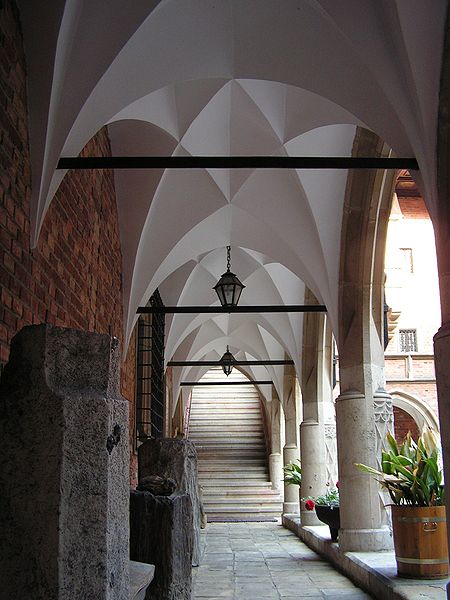
Today, Collegium Maius houses the Jagiellonian University Museum. Visitors can admire, among other treasures, one of the earliest globes depicting the newly discovered American continent, as well as numerous scientific instruments – including those once used by Copernicus himself.
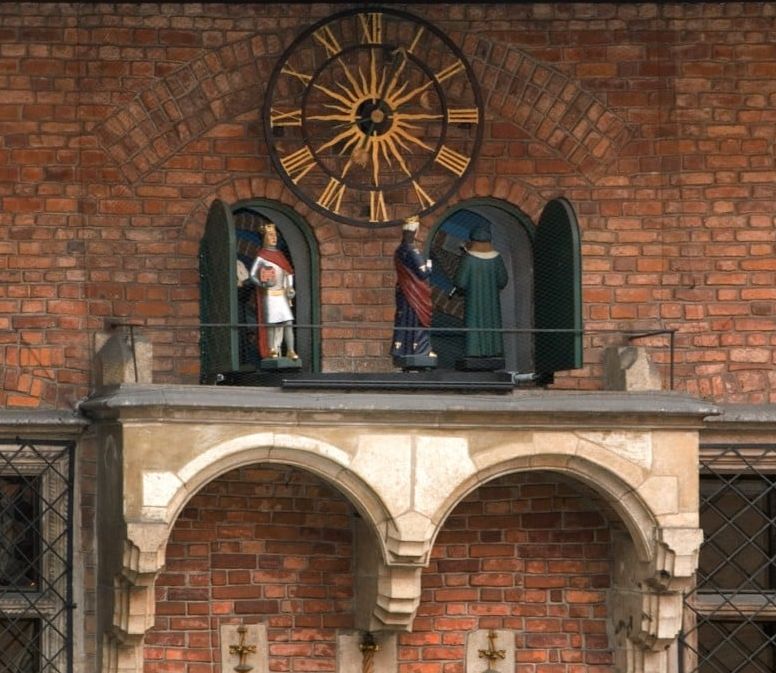
Several times a day – at 9:00, 11:00, 13:00, 15:00, and 17:00 – a clock in the courtyard comes to life. To the melody of a medieval student hymn, wooden figures connected with the university emerge and parade around the courtyard, delighting visitors and locals alike.
A Quiet Garden and Practical Tips
Right beside the building lies a charming garden, where on warm days one can enjoy a coffee in a truly academic atmosphere.
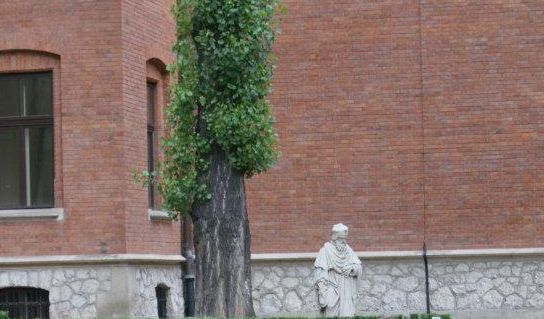
Entry to the Collegium Maius courtyard is free of charge. The courtyard opens at 9:00 a.m. and closes at dusk. Tickets for the museum can be purchased on the left side of the courtyard. On the right, visitors will find the atmospheric basement café U Pęcherza, perfect for an “academic coffee.” Behind the building, the garden offers a peaceful retreat – and occasionally, the chance to encounter a medieval professor immortalised in sculpture.