
Oskar Schindler – The Man Who Saved 1,200 Lives
Entrepreneur. Altruist. A man who defies simple labels. A man who saved 1,200 lives.
Early Life and the Road to Cracow
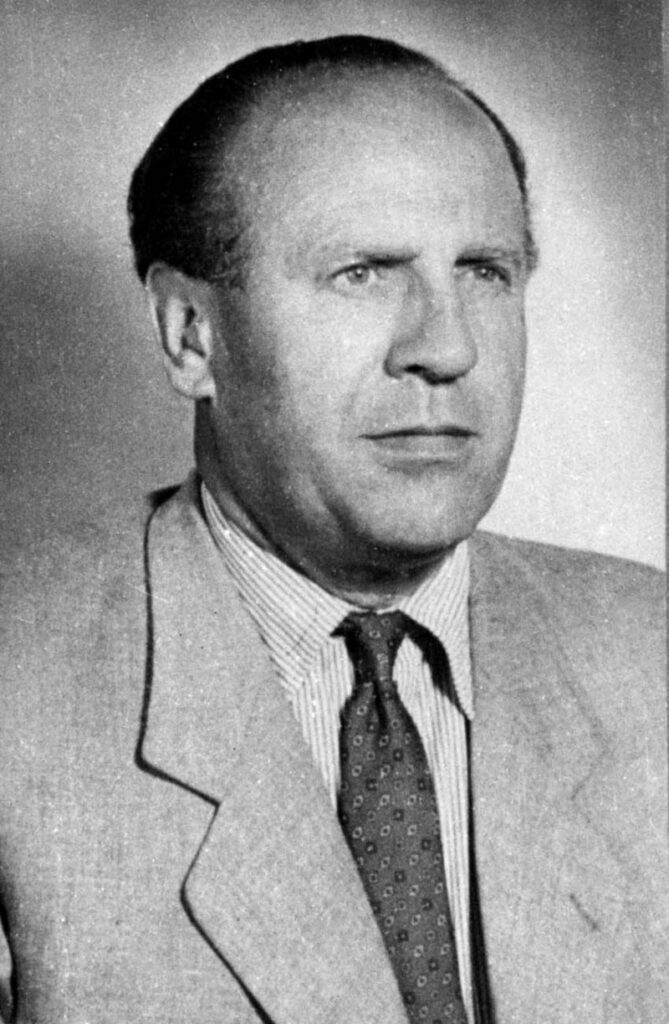
Oskar Schindler was born on 28 April 1908 in the Moravian town of Zwittau (today Svitavy in the Czech Republic). At the age of twenty, he married Emilie Pelzl, the daughter of wealthy farmers. Schindler initially worked in his father’s factory producing agricultural machinery, but the business collapsed during the global economic crisis of October 1929. He later found work as a sales representative in Brno.
In 1935, Schindler joined the Sudeten German Party and soon after became involved with the Abwehr, the German military intelligence service. For his activities in Czechoslovakia and Poland, he was arrested in 1938 but released shortly thereafter following the annexation of the Sudetenland by the Third Reich. He subsequently joined the Nazi Party (NSDAP).
After German troops entered Cracow on 6 September 1939, Schindler was assigned to the city, where he was expected to engage in business activities under the new occupation authorities.
The Factory in Zabłocie
Schindler soon acquired a cookware shop on Krakowska Street and took over the former enamelware factory “Rekord” in the industrial district of Zabłocie, in the Podgórze area of Cracow. He expanded the operation and transformed it into Deutsche Emailwarenfabrik (DEF).
Using assets confiscated from Jewish owners, Schindler developed the factory into a profitable enterprise. In addition to enamelware, the factory began producing goods for the German military industry, which granted it special privileges at a time when the war effort was intensifying.
The factory’s income came primarily from military contracts, but it also benefited from black-market trading, for which Schindler was arrested several times. Each time, however, his close relationships with high-ranking Nazi officials in the General Government allowed him to avoid serious consequences.
What is often overlooked is that much of Schindler’s income was redirected toward helping Jews.
From Profit to Protection
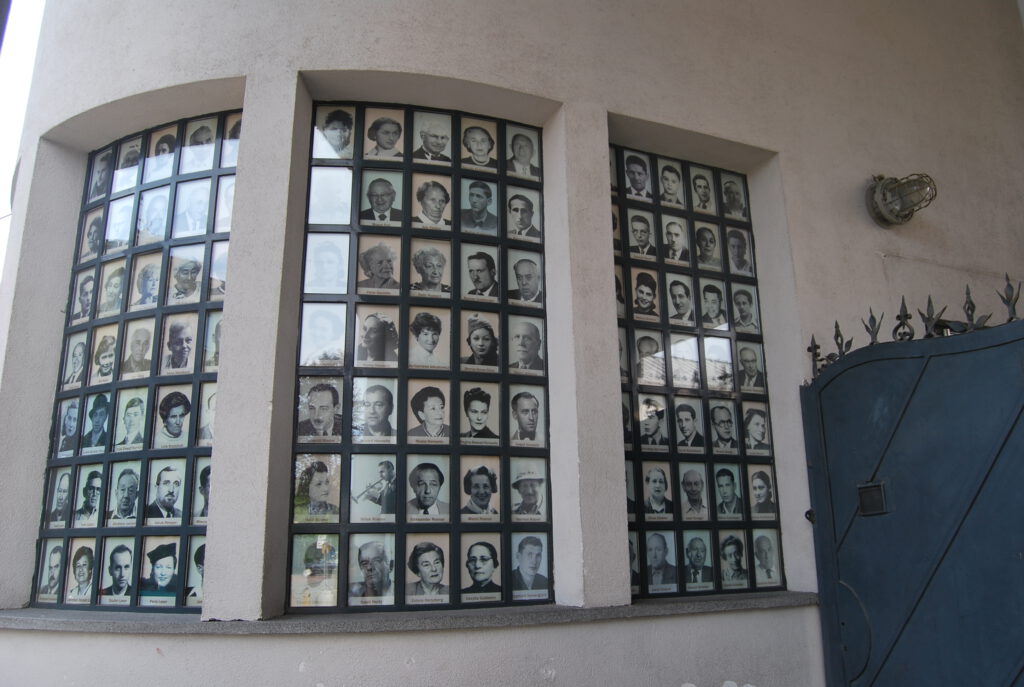
Year by year, Deutsche Emailwarenfabrik employed more and more Jewish workers. Initially, Schindler’s motivation was largely economic. But in 1943, after the liquidation of the Cracow Ghetto, he built living facilities for several hundred Jewish forced labourers within the factory grounds. Officially, this facility functioned as a subcamp of the Plaszow labour camp.
Through bribery and negotiation, Schindler ensured that his workers could remain at the factory. They were housed, protected from deportation, and provided with sufficient food – a rarity under the brutal conditions of the occupation.
In 1944, as the front approached Cracow, Schindler evacuated both his production and his Jewish workers to a factory in Brünnlitz, in Moravia. There, the factory continued to operate until the arrival of the Red Army on 8 May 1945.
Life After the War
After the war, Schindler remained in contact with the Jews he had saved. His story spread largely through their testimonies, and at their invitation he travelled several times to Israel.
In 1963, Oskar Schindler was honoured with the title “Righteous Among the Nations,” awarded by Yad Vashem in Jerusalem to non-Jews who risked their lives to save Jews during the Holocaust.
Schindler never again achieved financial success. He lived on a modest pension from the German state and on financial support from Jewish organisations and individuals he had once helped. He died on 9 October 1974 in Hildesheim, Germany.
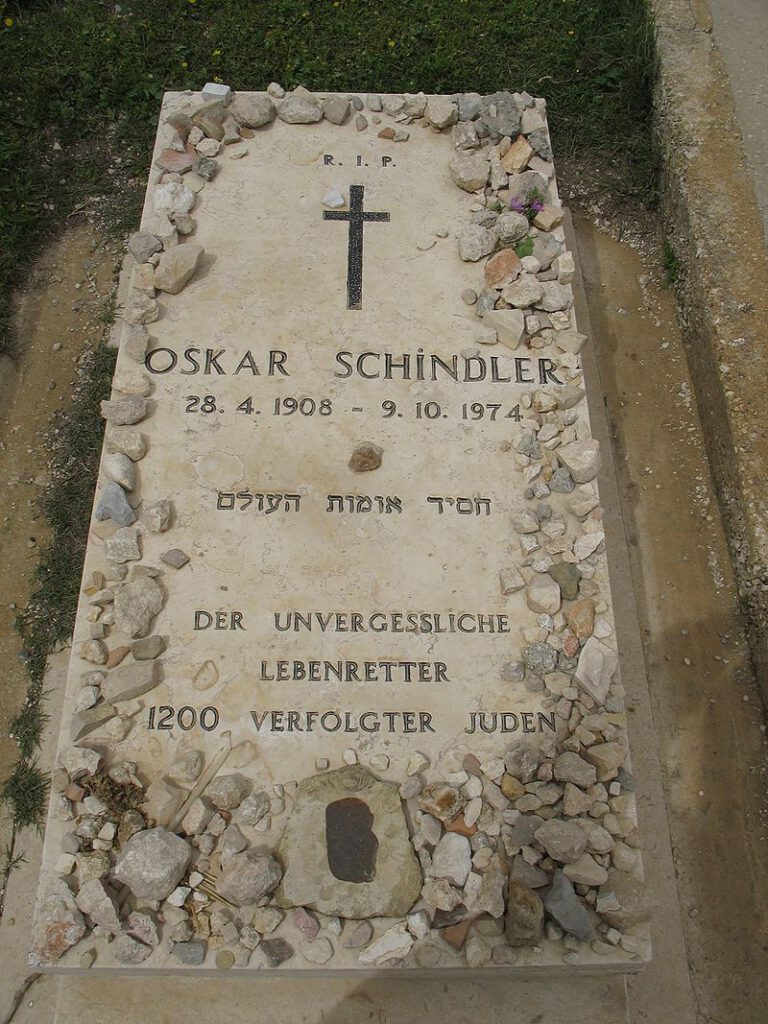
In accordance with his wishes, he was buried on Mount Zion in Jerusalem – an exceptional honour and a testament to the lives he saved.
From History to Legend
Schindler became widely known through Thomas Keneally’s book *Schindler’s Ark*, and achieved global fame through Steven Spielberg’s 1993 film *Schindler’s List*.
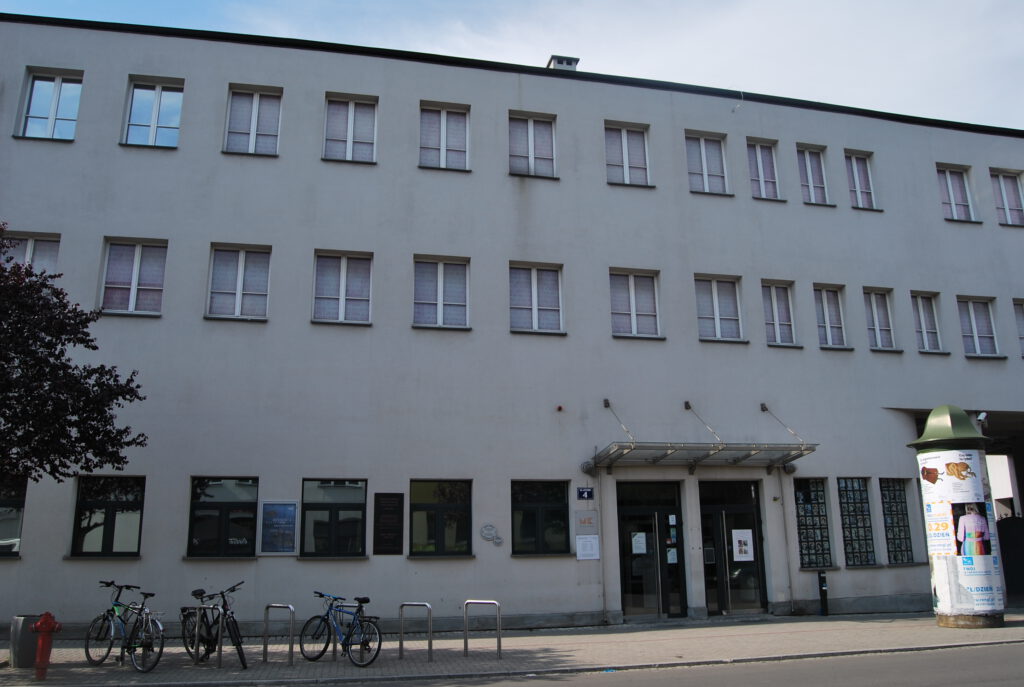
In 2010, a museum was opened in Cracow in the factory Schindler had operated during the Second World War. Known today as Schindler’s Factory, the museum is located at Lipowa Street 4. It tells the story not only of Schindler himself, but also of Cracow and its inhabitants under Nazi occupation. A significant portion of the exhibition is devoted to the fate of the city’s Jewish population.
Oskar Schindler’s life remains a powerful reminder that even within a system built on cruelty and destruction, individual choices could still save lives.