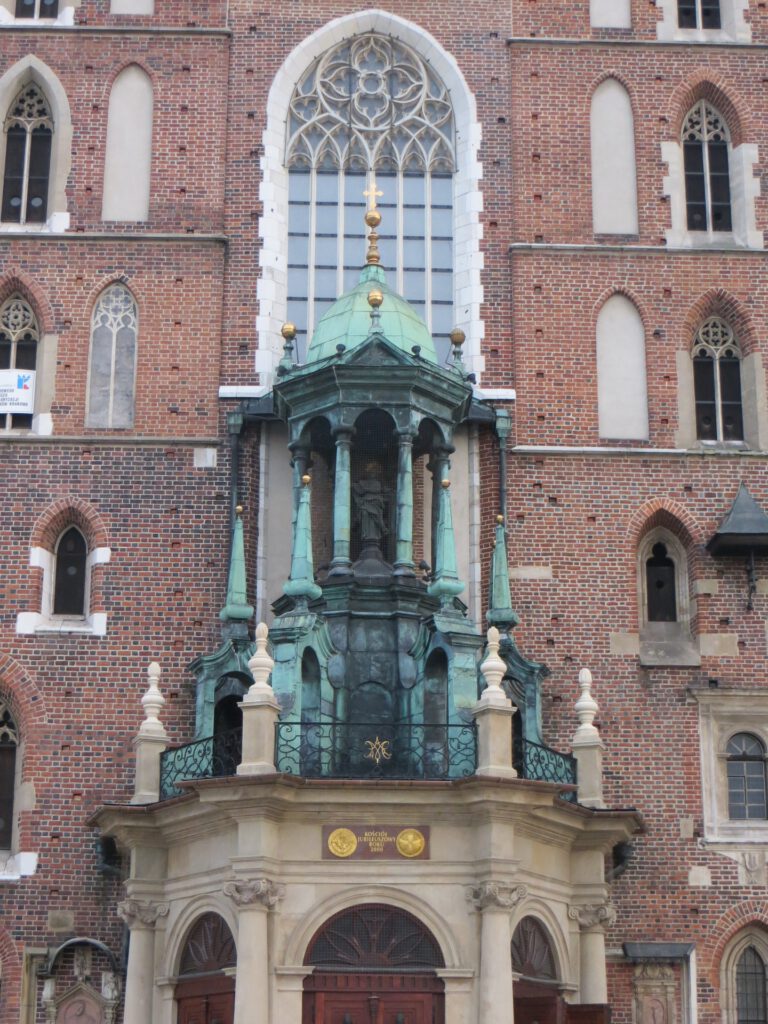

St. Mary’s Basilica – Older Than Cracow Itself
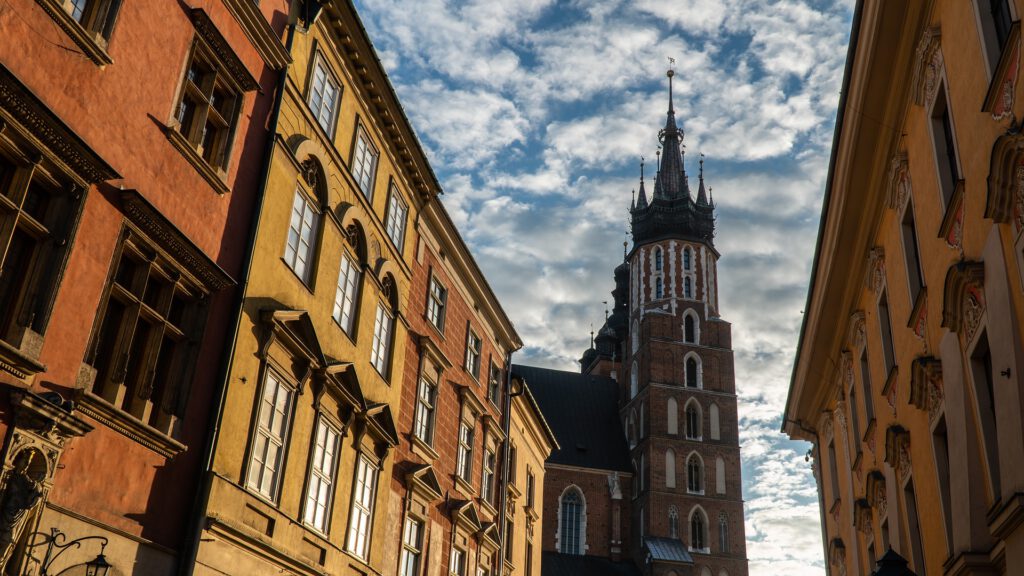
When one thinks of Cracow, one image comes to mind almost instinctively: St. Mary’s Basilica. More than any other building, it has become the city’s most recognisable landmark. Even in comparison with Wawel Cathedral, St. Mary’s Basilica holds a unique place in Cracow’s identity.
The Church Before the City
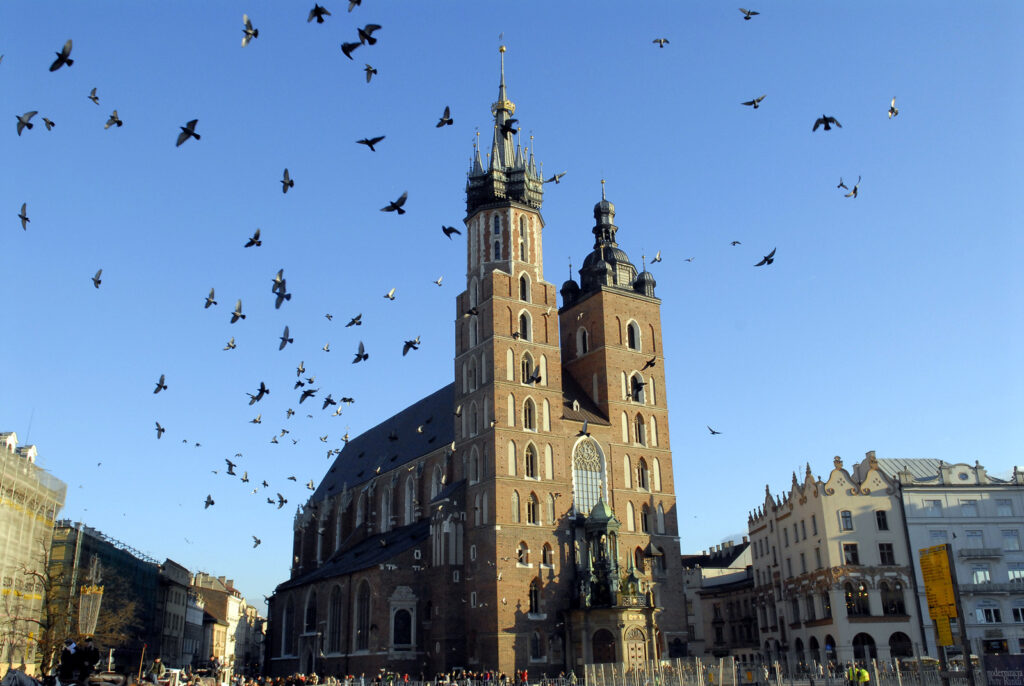
St. Mary’s Basilica stood at the heart of Cracow even before the city was formally founded and granted municipal rights in 1257. This is why the church is set at a slight angle in relation to the Main Market Square – it predates the square’s regular, geometric layout. The first church on this site was built in the early 13th century in the Romanesque style. Around a hundred years later, a new Gothic basilica was consecrated on the same foundations. One of the Old Town’s most important streets, Floriańska Street, ends precisely at the church, reinforcing its central role in the city’s spatial and symbolic structure.
Two Towers and a Medieval Warning
One of the basilica’s most distinctive features is its two asymmetrical towers. The lower tower serves as the bell tower, while the taller one functioned as a watchtower in medieval times. From this higher tower, every hour on the hour, a short trumpet melody is played – abruptly cut off mid-note. This tradition commemorates the legendary medieval trumpeter who, according to local lore, was shot while sounding the alarm during a Tatar attack on Cracow in the 13th century. The call has become one of the city’s most cherished and instantly recognisable sounds.
An Interior of Extraordinary Beauty
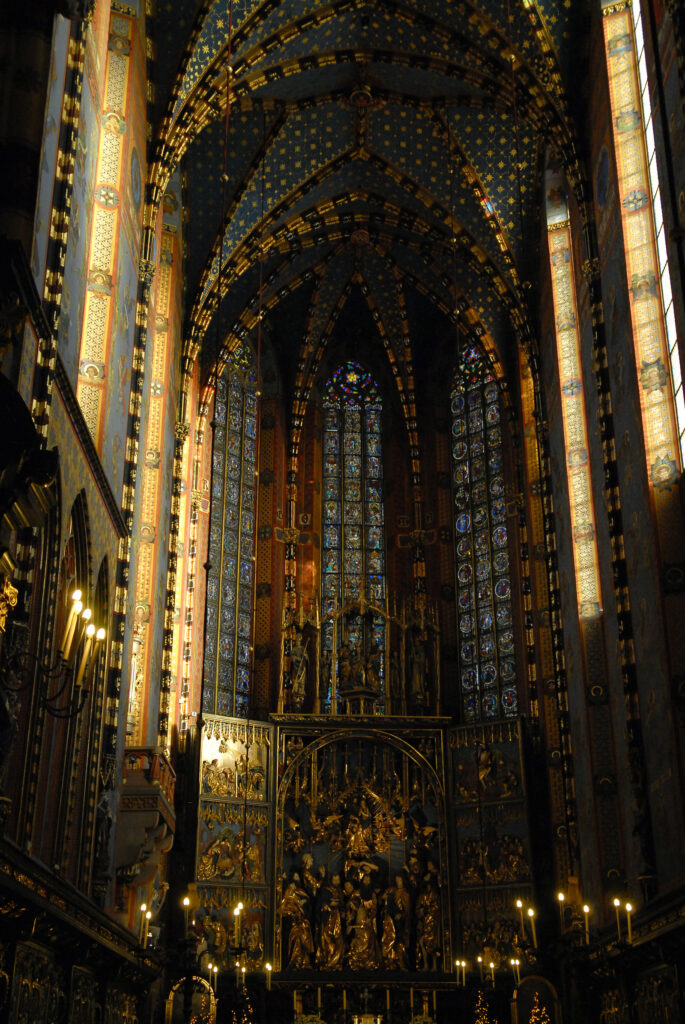
In the 15th century, St. Mary’s Basilica received one of Europe’s most remarkable works of sacred art: a monumental altarpiece carved in limewood by the German master sculptor Veit Stoss. This late Gothic masterpiece, depicting scenes from the life of the Virgin Mary, continues to inspire awe with its scale, detail, and emotional power. In the 18th century, the church and its chapels were “modernised” in the Baroque style, reflecting contemporary tastes. The interior we see today, however, is largely the result of a major restoration carried out at the end of the 19th century.
At that time, the prevailing artistic movement was Art Nouveau, which drew inspiration from the spirit of Gothic art. Leading Cracow artists reinterpreted the interior, restoring its Gothic character while enriching it with vibrant colour and ornamentation.
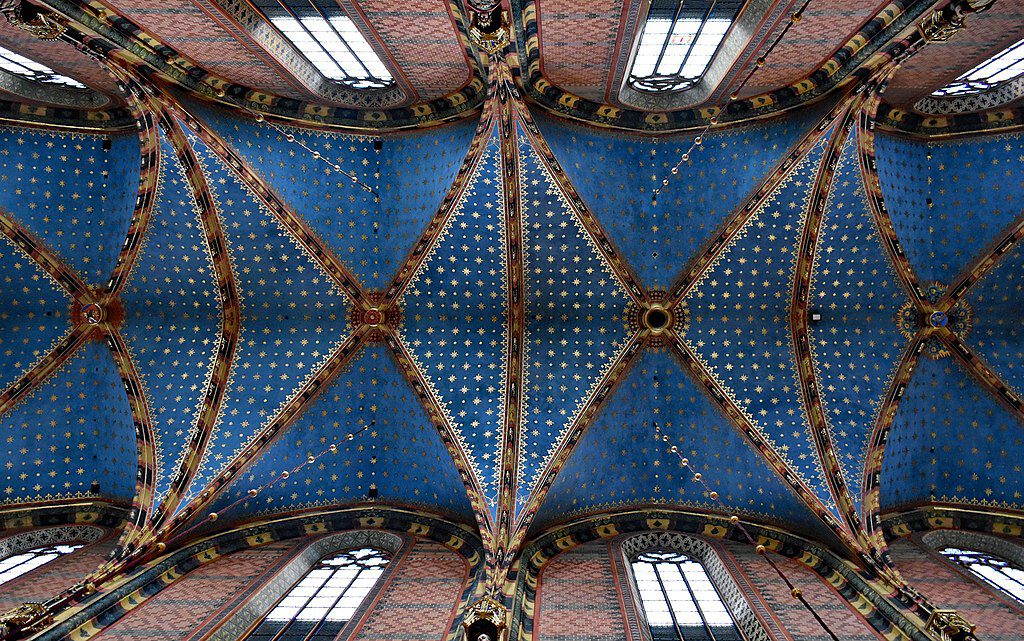
The basilica was adorned with magnificent stained-glass windows, harmonising with the preserved medieval originals. These windows primarily depict the Virgin Mary, surrounded by stylised floral motifs. At the same time, the walls and vaults were covered with richly coloured plant patterns and angelic figures. The original Gothic vaults were painted to resemble a star-filled night sky, creating a sense of celestial infinity above the faithful – one of the most striking features of the church’s interior.
A Place of Prayer and Discovery
Today, St. Mary’s Basilica serves both as a place of worship and as one of Cracow’s most important tourist attractions, particularly for those wishing to admire the famous medieval altarpiece. Religious services are held daily, and each day the church welcomes visitors from around the world.
To maintain order and respect, the basilica has two separate entrances: one for prayer and one for sightseeing. The entrance for worshippers is located to the right of the main portal. Visitors wishing to see the interior and the altar up close should enter to the left, near the small pigeon fountain.
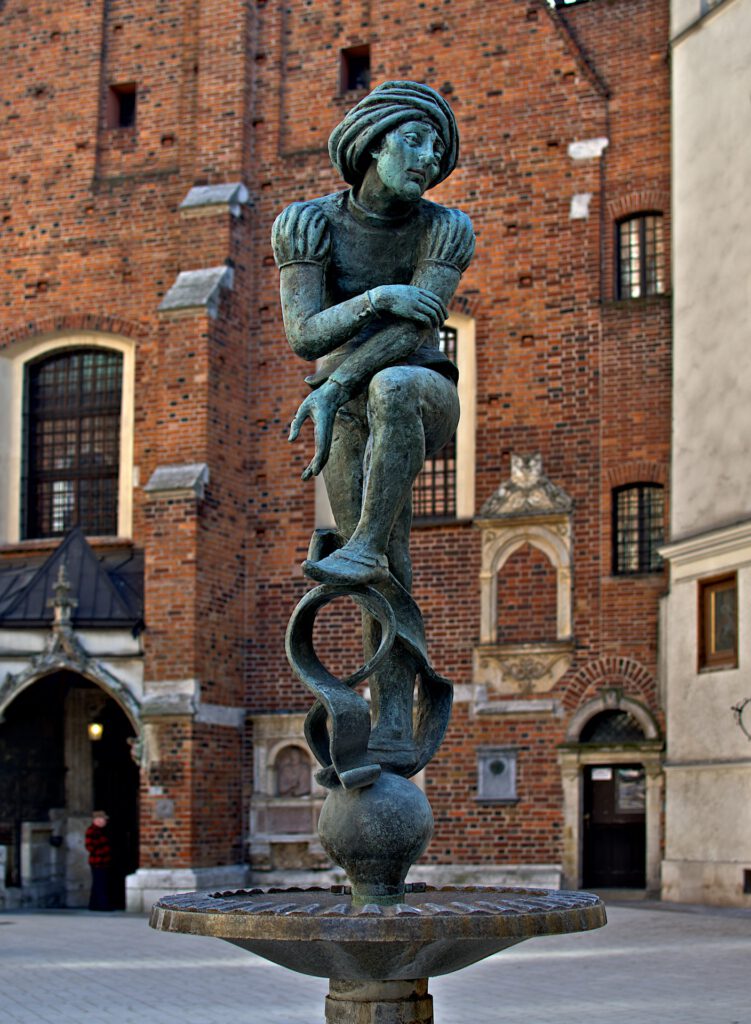
Please note that tickets must be purchased before entering. The ticket office is located near the fountain. The altarpiece cannot be viewed during religious services. St. Mary’s Basilica is more than a monument. It is a living symbol of Cracow – a place where history, art, faith, and daily life have met for centuries and continue to do so today.