

The Old Town – The Heart of Poland’s Cultural Capital
Reaching Cracow’s Old Town couldn’t be easier. Simply walk through Planty Park – the green ring that surrounds the historic centre – and within minutes you will find yourself in the very heart of the medieval city.
Planty Park was created in the 19th century on the site of the former city walls. Today, only a small fragment of the fortifications remains, together with the most important of the medieval gates: St. Florian’s Gate. Passing through the park and under the gate is like crossing an invisible threshold between the modern city and centuries of history.
Main Market Square – The Living Heart of the City
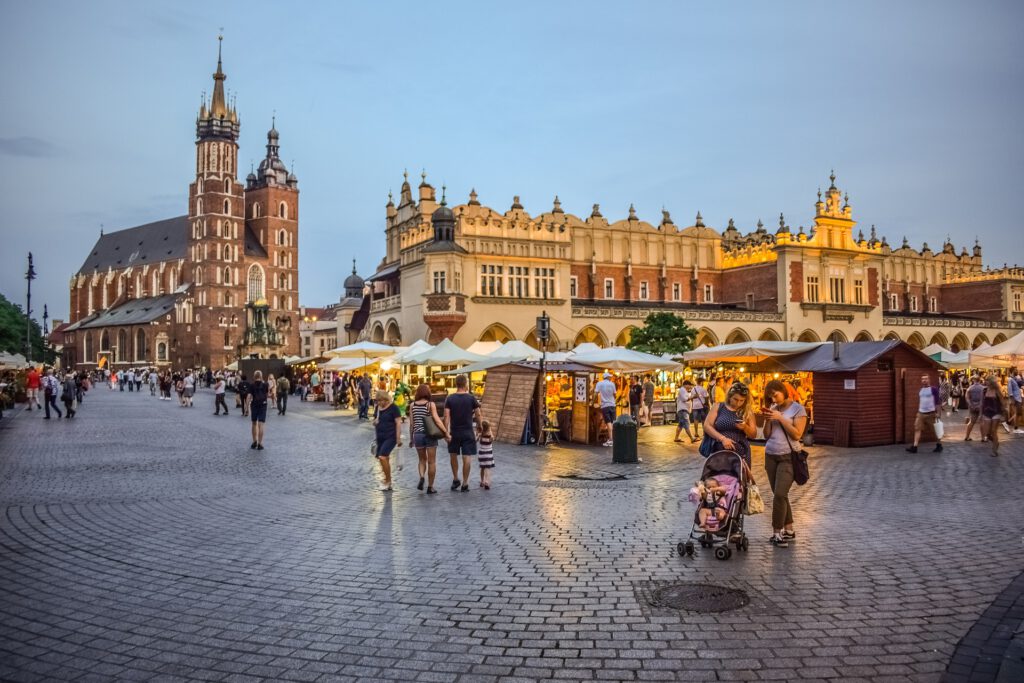
At the centre of the Old Town lies the Main Market Square, laid out in 1257, when Cracow was granted municipal rights. It was marked out at the point where major trade routes intersected, and for centuries it functioned as Cracow’s political, economic, and social hub. Even today, it remains the city’s most important public space.
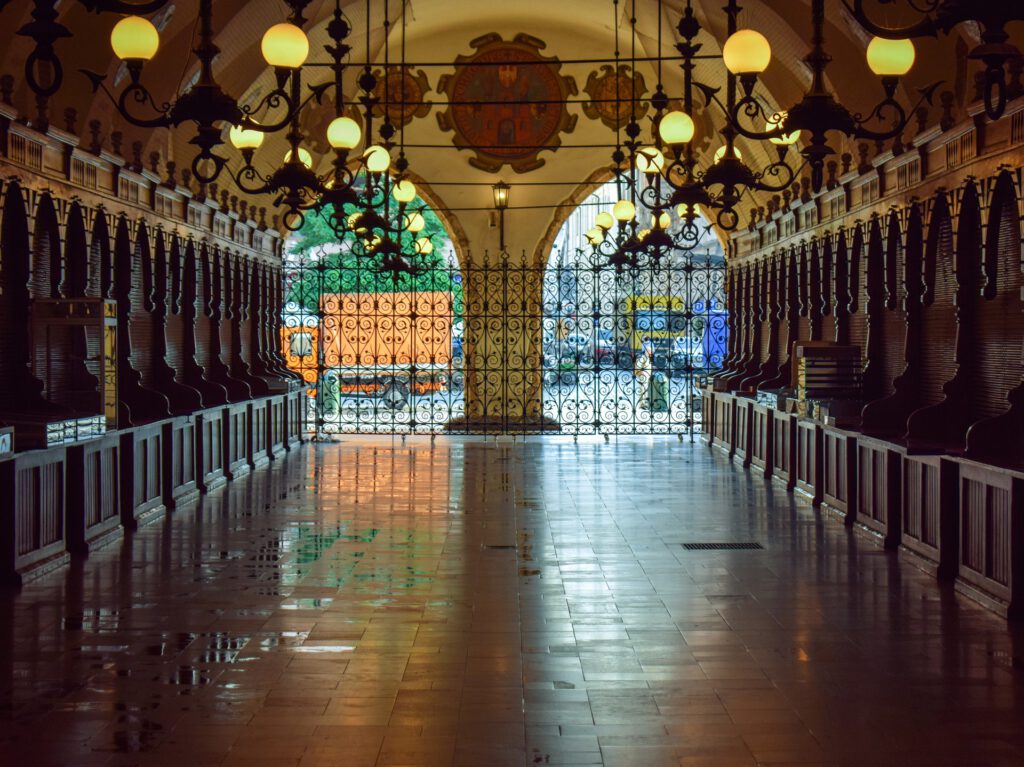
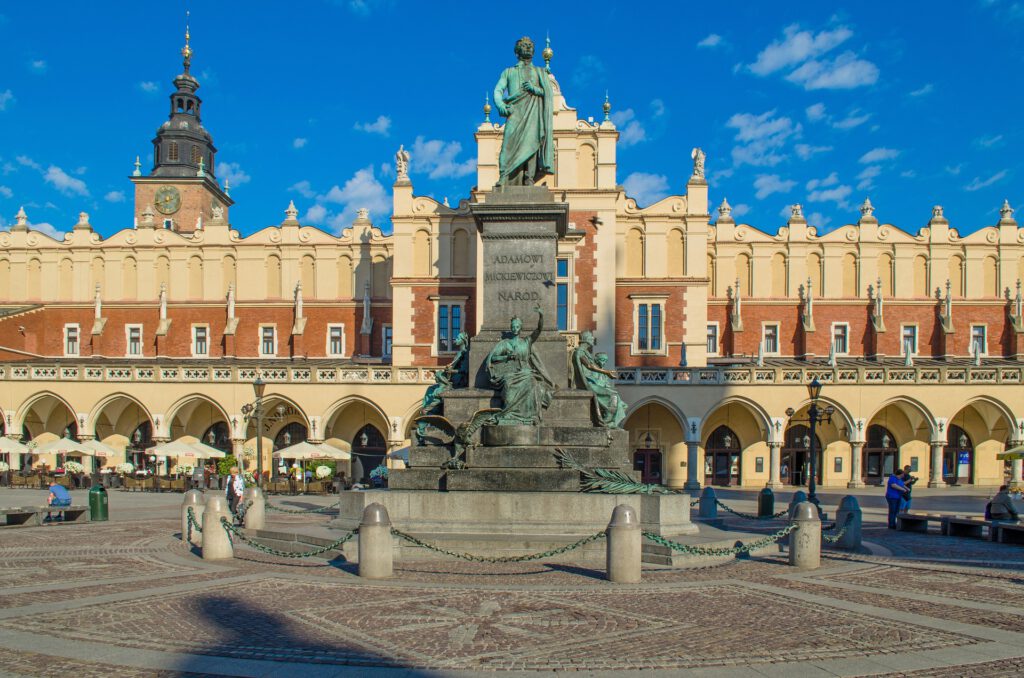
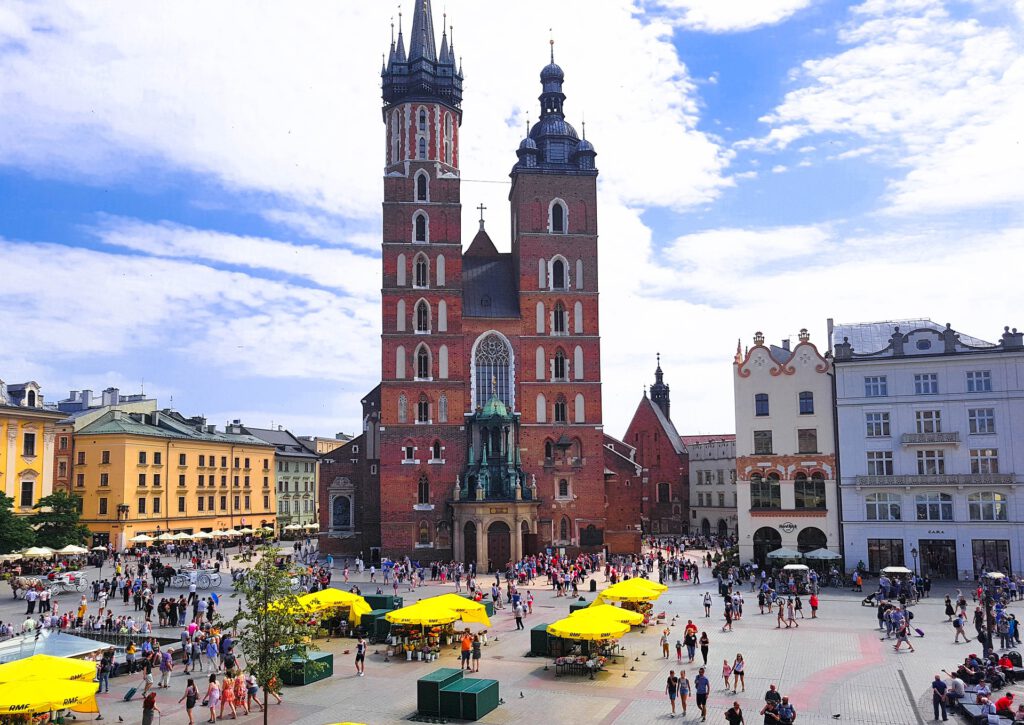
Locals often refer to the square as Cracow’s “living room.” For visitors, it is usually the starting point for discovering the city. In front of St. Mary’s Basilica, flower stalls operate year-round, filling the square with colour. Every hour, a trumpet call sounds from one of the basilica’s towers, abruptly cut off – a reminder of the medieval legend of a trumpeter killed while warning the city of a Tatar attack. In the centre of the square stands the Cloth Hall, a magnificent Renaissance building where merchants once traded goods from across Europe. Today, it offers unique souvenirs from the Lesser Poland region. Surrounding the square, countless cafés and restaurants invite visitors to sit down and quite literally taste Cracow.
Streets of History and Everyday Life
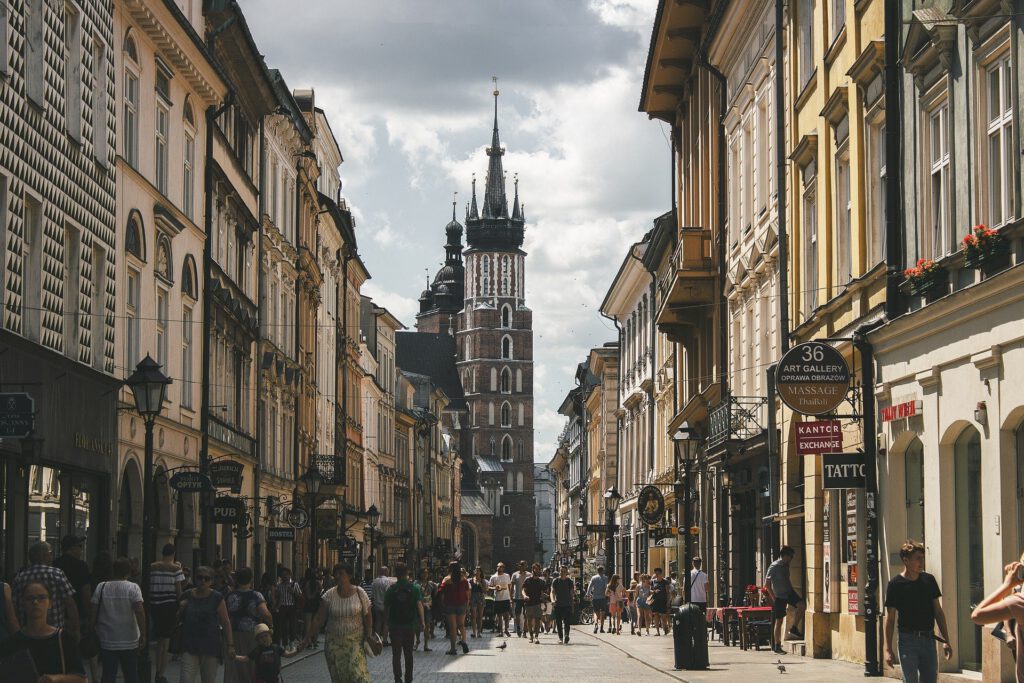
The most popular streets of the Old Town are Floriańska and Grodzka. Together, they form part of the so-called Royal Route – a medieval ceremonial road leading from St. Florian’s Church, through St. Florian’s Gate, across the Main Square, and onward along Grodzka Street to Wawel Hill and the Royal Castle. Grodzka Street is even older than Floriańska. Today, both streets are lined with hotels, restaurants, cafés, and shops selling amber jewellery, wooden toys, and handmade souvenirs. A parallel street worth special mention is Kanonicza Street, widely regarded as one of the most atmospheric and charming in Cracow.
The University Quarter
A visit to Cracow would not be complete without exploring the university quarter. This is where Poland’s oldest university – the Jagiellonian University, founded in 1364 – is located. One of its oldest buildings, Collegium Maius, once served both as lecture halls and professors’ residences. Today, it houses a university museum. In the 15th and 16th centuries, Nicolaus Copernicus studied here – the astronomer who revolutionised our understanding of the universe by proposing the heliocentric model.
A City of Churches
The Old Town would not be itself without its countless churches. St. Mary’s Basilica is famous for its breathtaking late Gothic altarpiece from the 15th century. The Franciscan Church enchants visitors with its colourful stained glass and wall paintings. Nearby stand St. Adalbert’s Church, the Dominican Basilica, the Church of Saints Peter and Paul, and many others. For good reason, Cracow is often called the “Second Rome.” Each church is unique, yet together they create a spiritual atmosphere that defines the city. Even for non-believers, these interiors offer a moment of stillness and a glimpse of eternity in an often restless world.
A UNESCO World Heritage Site
Cracow’s Old Town has an extraordinary amount to offer. It has long been the cultural heart of Poland, and over forty years ago it was inscribed on UNESCO’s very first World Heritage List as a historic urban ensemble. Since then, it has continued to delight both locals and visitors from Poland and abroad. The Old Town is far more than a collection of monuments. It is a living space – vibrant, layered, and deeply human – where history and everyday life exist side by side.


