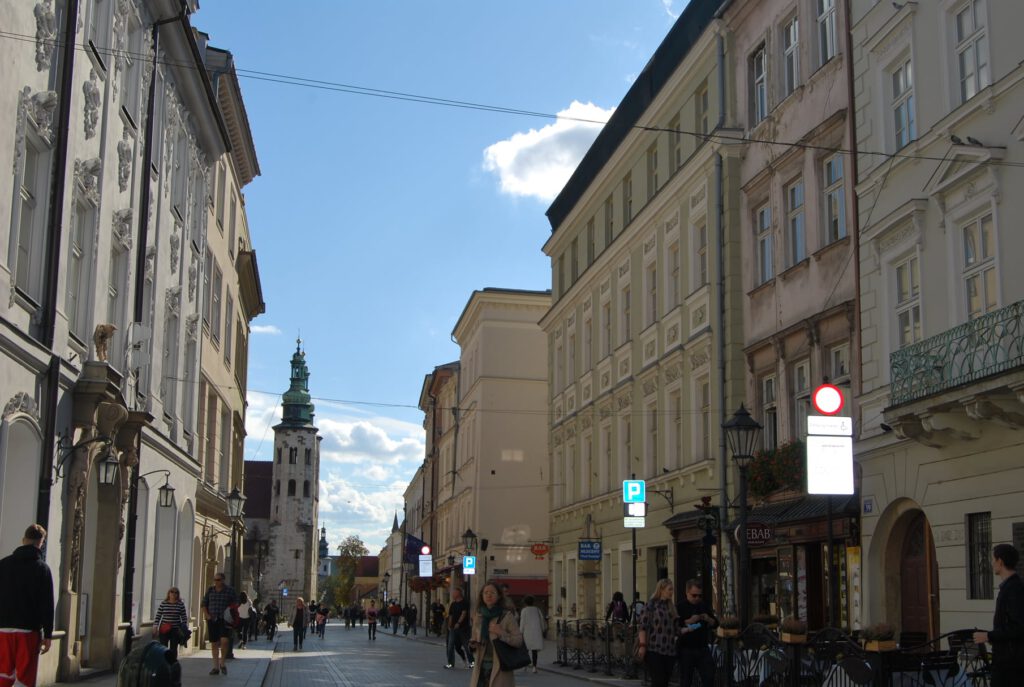

Floriańska and Grodzka Streets – The Old Town’s Historic Axis
Floriańska and Grodzka Streets are the most famous streets of Cracow’s Old Town. Together, they form a part of the Royal Route – a medieval ceremonial road that begins at St. Florian’s Church, passes through St. Florian’s Gate, continues along Floriańska Street and across the Main Market Square and Grodzka Street, then follows Grodzka Street before turning into Kanonicza Street and reaching Wawel Hill.
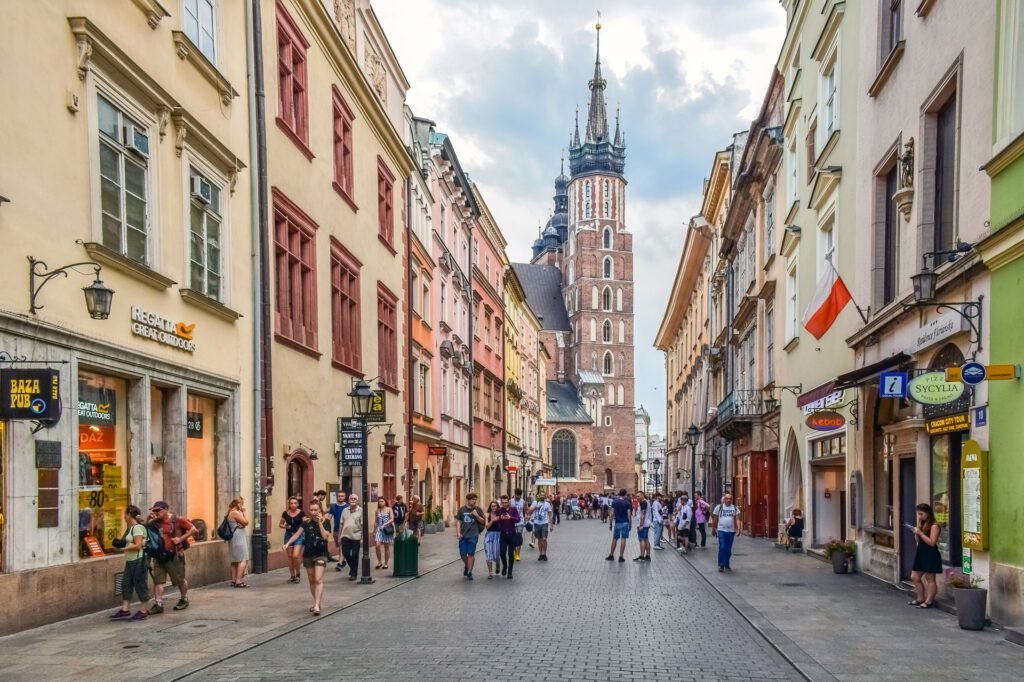
Floriańska Street – From the Gate to the Square
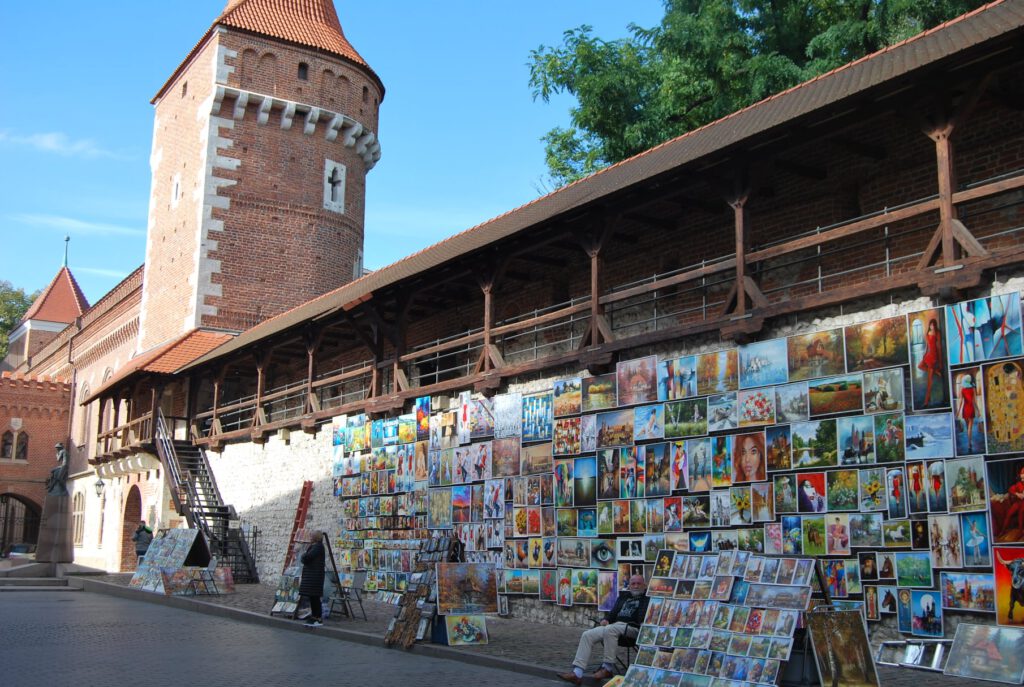
Floriańska Street begins at the Main Market Square and leads north to St. Florian’s Gate – the only one of the city’s eight medieval gates that has survived. Both the street and the gate take their name from nearby St. Florian’s Church. Since the Middle Ages, St. Florian has been the patron saint of Cracow, believed to protect the city from fire.
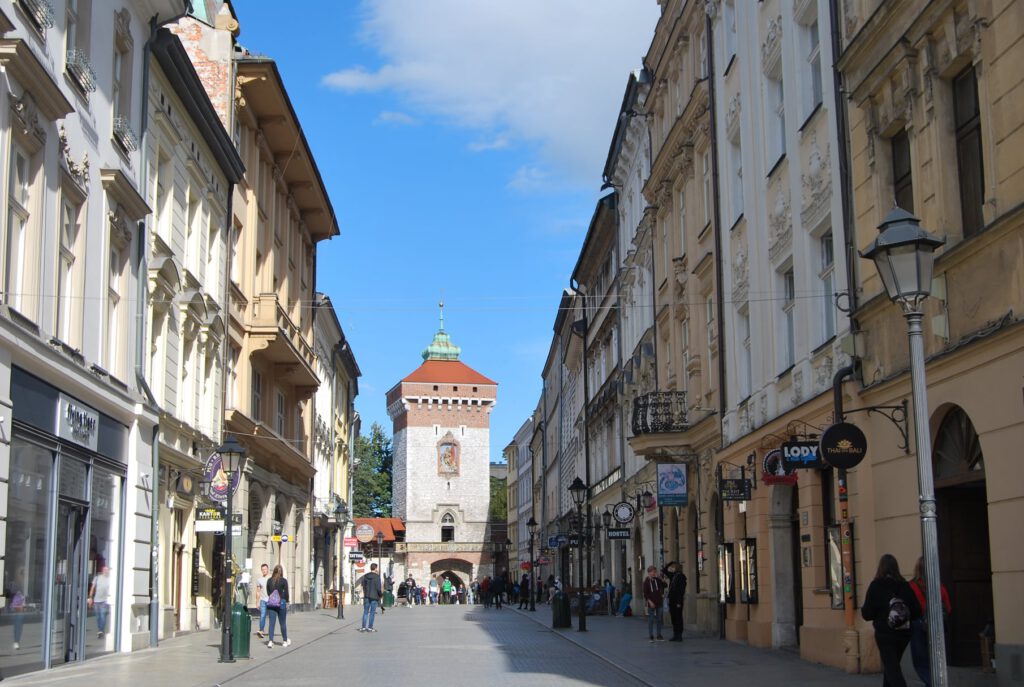
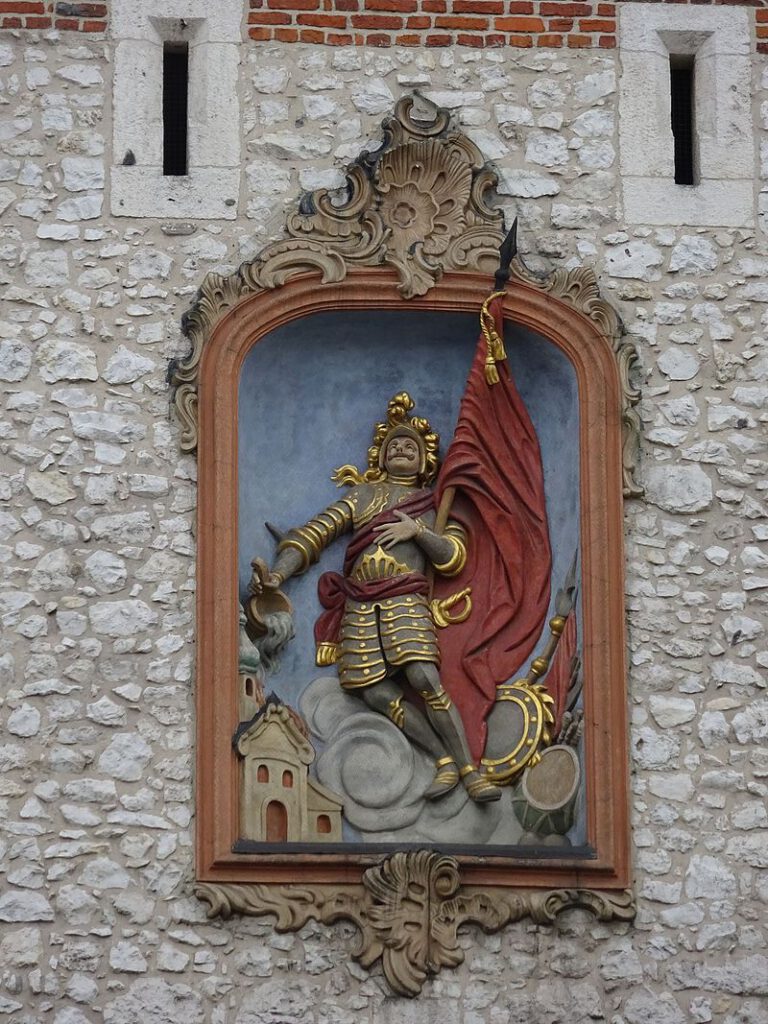
The street was laid out around 1257, at the same time Cracow received its city rights. It was one of the first streets to be paved and lined with stone townhouses. Many of these buildings still impress with their Gothic and Renaissance architecture. Among the most notable are Cracow’s oldest hotel, Hotel Pod Różą (established in 1800), and Poland’s largest Pharmacy Museum, where visitors can see how pharmacies operated centuries ago – even as far back as the 16th century.
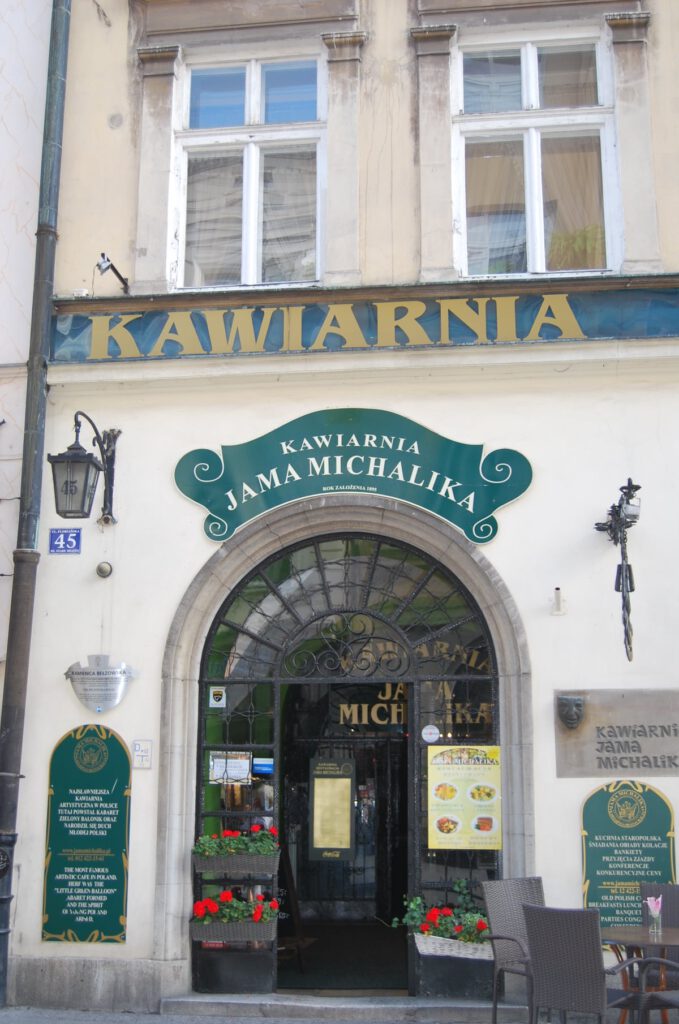
Floriańska Street is also home to the former residence of the 19th-century painter Jan Matejko, famous for his monumental historical paintings. Another iconic spot is Jama Michalika, a café from the late 19th century that once served as the meeting place of Poland’s first artistic cabaret.
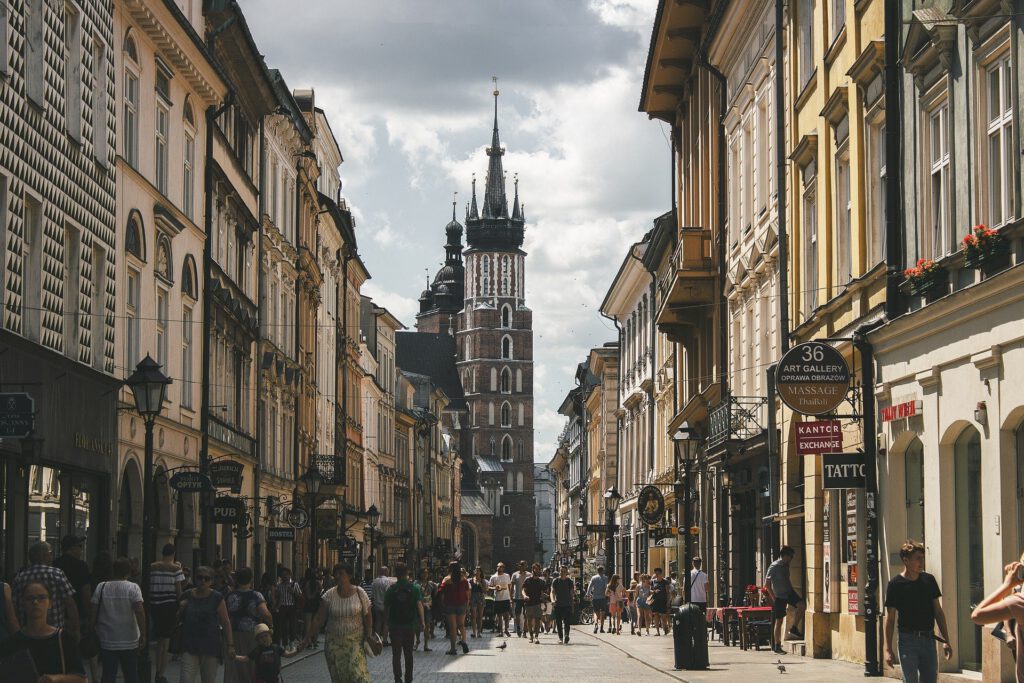
Today, Floriańska Street remains one of the busiest and most popular streets in Cracow. It is lined with restaurants, cafés, hotels, and shops, particularly those selling shoes, souvenirs, and amber jewellery.
Grodzka Street – The Road of Salt and Kings
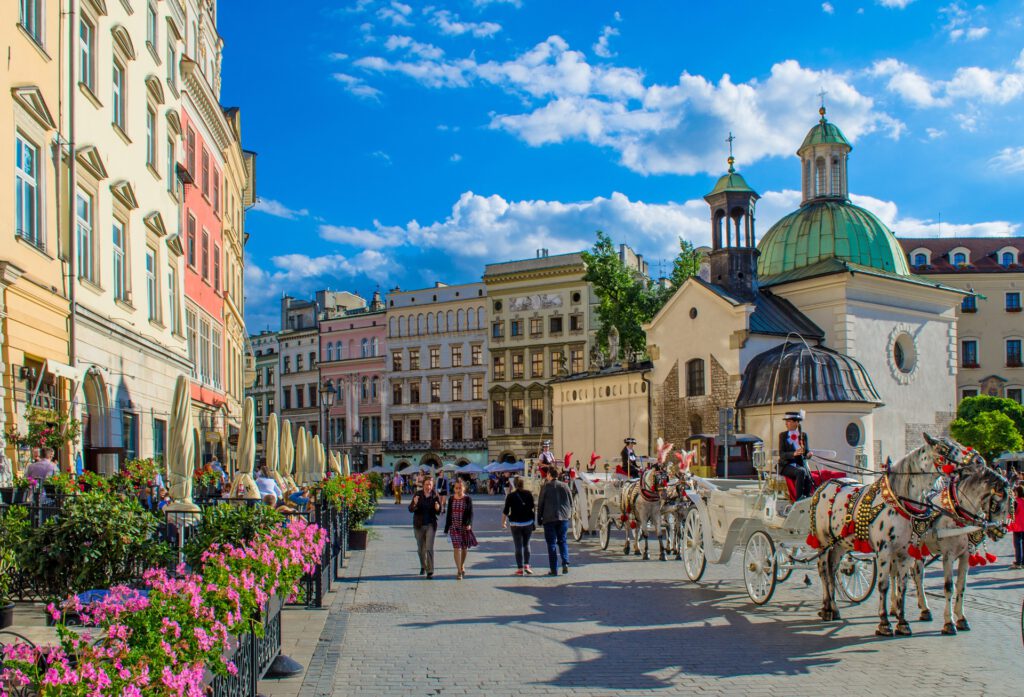
Grodzka Street is even older than Floriańska. It begins at St. Adalbert’s Church – the small white church standing on the Main Market Square – and runs south toward Wawel Hill. The street takes its name from the medieval Grodzka Gate, which once stood at its southern end.
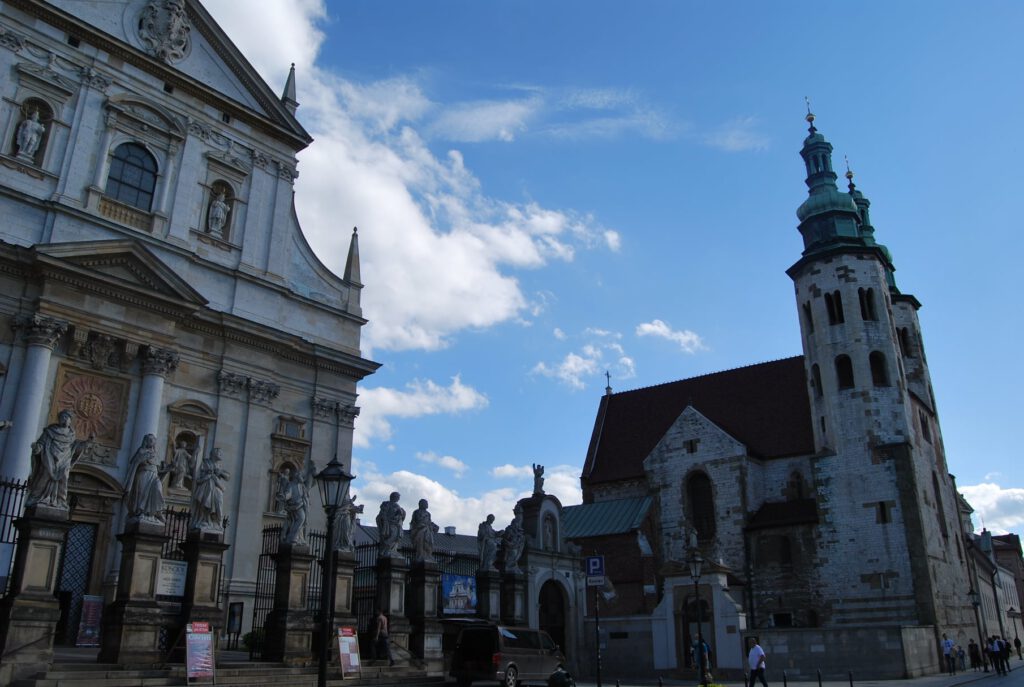
Grodzka Street existed even before 1257, as part of an important trade route transporting salt from Wieliczka toward Hungary. Stone townhouses lined the street as early as the 14th century. Along Grodzka Street stand several remarkable churches, including the Romanesque Church of St. Andrew and the Church of Saints Peter and Paul – Cracow’s first Baroque church.
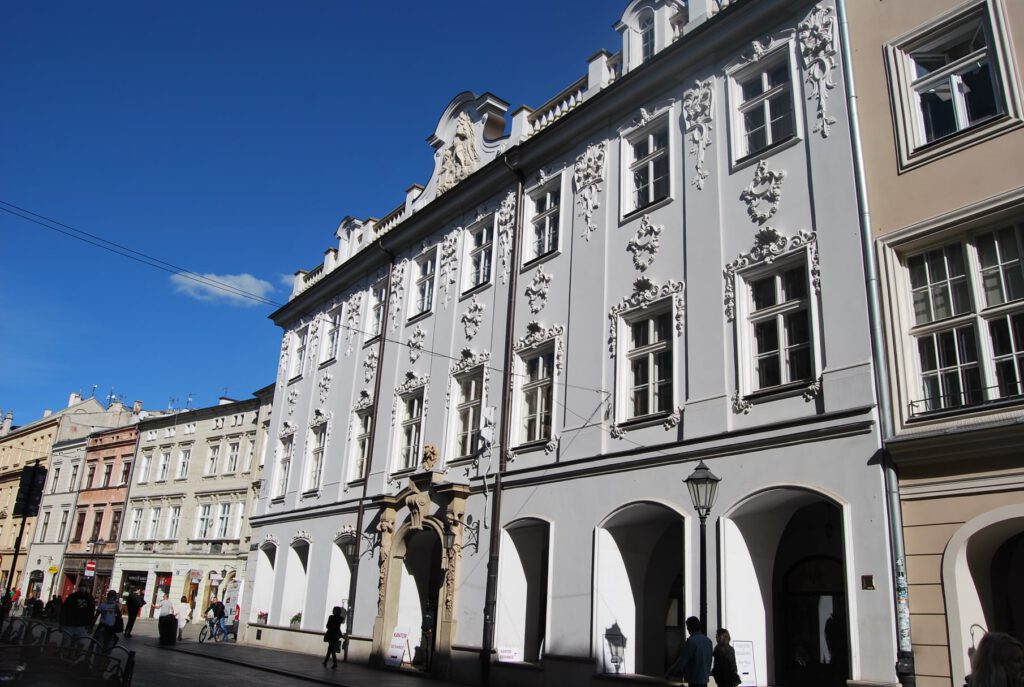
Today, Grodzka Street is lively and welcoming, filled with hotels, restaurants, cafés, and shops offering jewellery, Polish ceramics, wooden toys, and glass souvenirs. It is also a street of culture and learning: the famous sculptor Veit Stoss, creator of the 15th-century altarpiece in St. Mary’s Basilica, once lived here. One of Poland’s first printing houses, founded in 1503, also operated on this street. Several institutes of the Jagiellonian University are still located here today.
In recent years, Grodzka has gained a few unusual attractions as well, including a living butterfly museum and workshops where visitors can watch traditional sweets being made. There is even a discount bookshop next to a rock and metal music store.
Walking along Floriańska and Grodzka Streets is more than a stroll through the city centre. It is a walk along Cracow’s historical spine – a route that has carried merchants, kings, artists, scholars, and everyday life for over seven centuries.