

Wawel Castle and Cathedral – A Mirror of a Thousand Years of Polish History
Rising 228 metres above the Vistula River, a limestone hill stands at the very heart of Cracow. For centuries, Wawel Hill has been a centre of power – both legendary and historical: princely, royal, and ecclesiastical. Although Wawel Castle and Cathedral are among Cracow’s most famous and frequently visited sites, the hill still hides many stories and secrets waiting to be discovered.
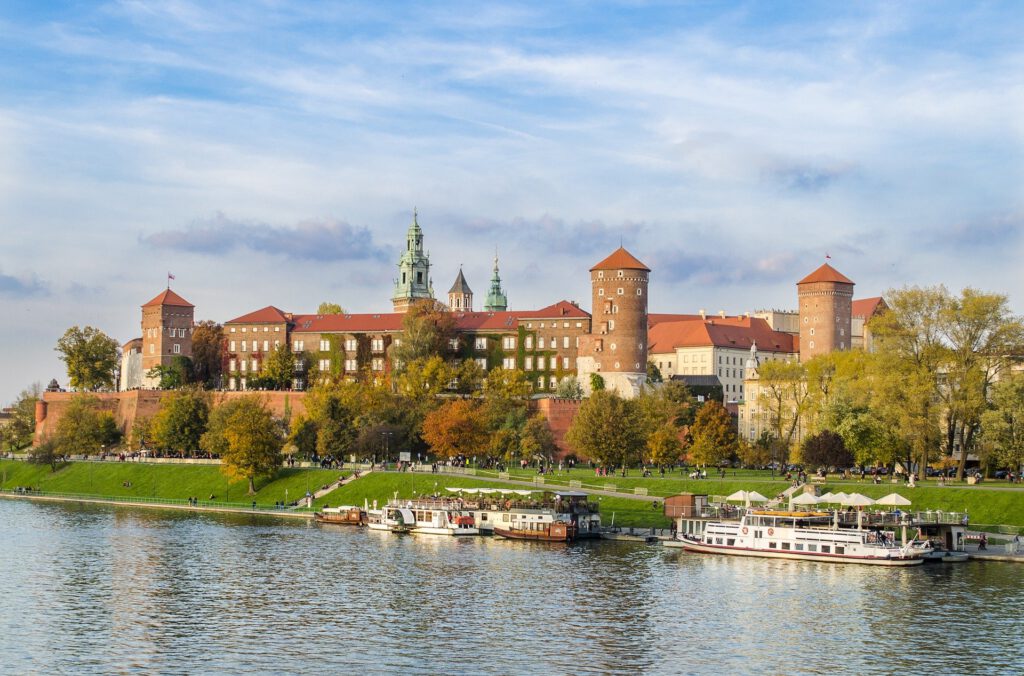
Wawel Castle and the Vistula River
The earliest traces of human presence on Wawel Hill date back tens of thousands of years. Even in prehistoric times, a hill rising above marshland and a major river offered natural protection and strategic advantage. According to legend, a dragon once lived in a cave beneath the hill – a creature feared by even the bravest warriors and ultimately defeated not by force, but by the cleverness of a humble shoemaker. Today, the Dragon’s Den and the fire-breathing dragon sculpture at the foot of the hill recall this legendary tale.
The first permanent settlements on Wawel Hill likely appeared in the 9th century, even before the formation of the Polish state. At that time, the site served as the seat of the ruler of the Vistulan tribe inhabiting the region. When the Polish state emerged, Cracow and Lesser Poland were incorporated into it, and Wawel remained a key centre of both secular and religious authority. As early as the 10th century, a stone stronghold and several churches stood on the hill.
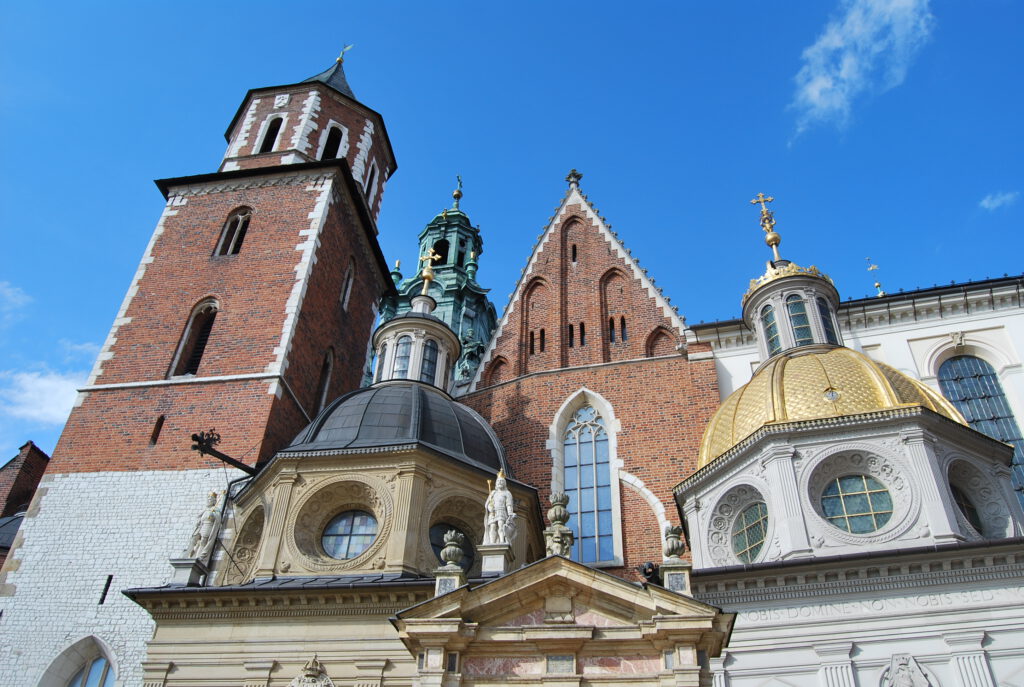
The Cathedral on Wawel Hill
In the year 1000, Cracow became the seat of its own bishopric, located on Wawel Hill, which soon led to the construction of a cathedral. By the 11th century, Wawel had become one of the principal ducal residences, visited by both princes and the earliest Polish kings as they travelled through the realm.
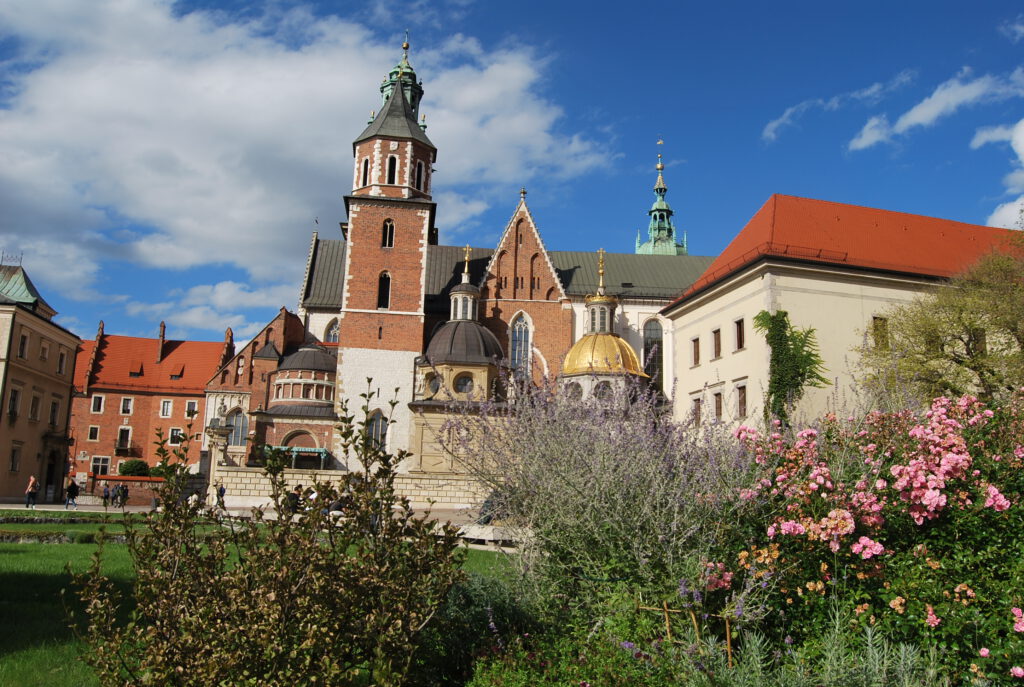
Over the centuries, the buildings on Wawel Hill passed through successive architectural styles: Romanesque, Gothic, and Renaissance. The castle courtyard and the Sigismund Chapel are regarded as the finest examples of Renaissance architecture north of the Alps. In the 16th century, Wawel became a centre of humanist culture, and the royal court was among the most influential in contemporary Europe.
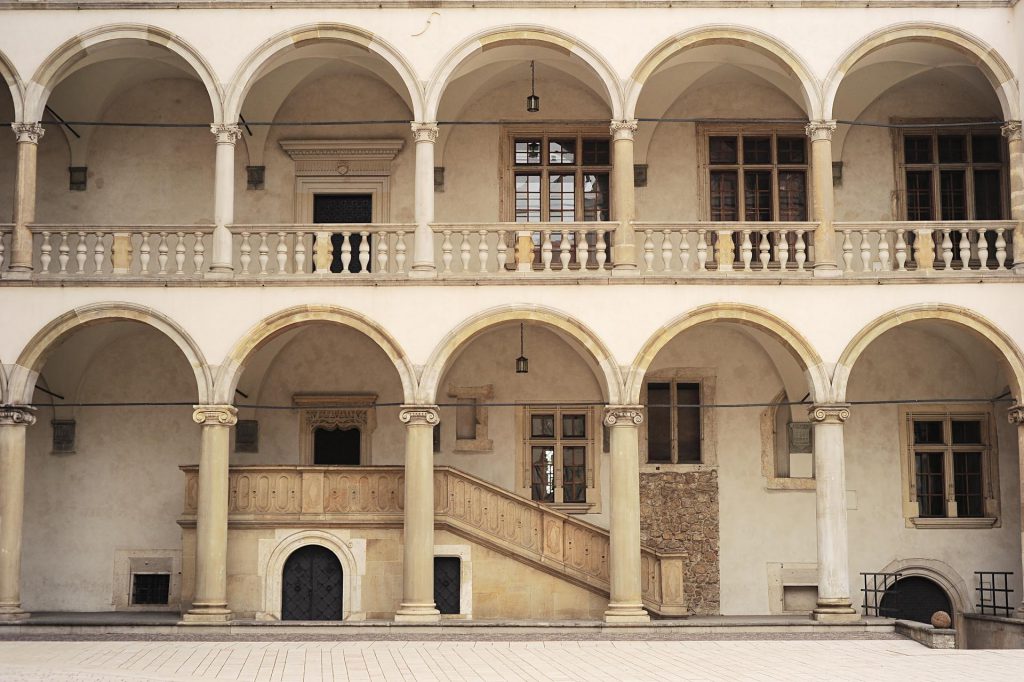
The Unique Renaissance Courtyard of the Castle
In the 17th century, Wawel Castle began to lose its political significance after the capital of Poland was moved from Cracow to Warsaw. The cathedral, however, retained its central role: Polish kings continued to be crowned and buried there.
In 1795, the Third Partition of Poland took place, as a result of which Poland disappeared from the map of Europe and its territory was divided among three neighbouring powers. Cracow fell under Austrian rule – a relatively fortunate outcome, as the city retained a degree of autonomy. The castle itself, however, was occupied by Austrian soldiers, who partially destroyed its interiors. They also constructed a red-brick building facing the Vistula River, which they converted into a military hospital.
It was during this period that Wawel Hill began to be widely regarded as a symbol of Polish national unity and as the cultural and spiritual heart of the nation.
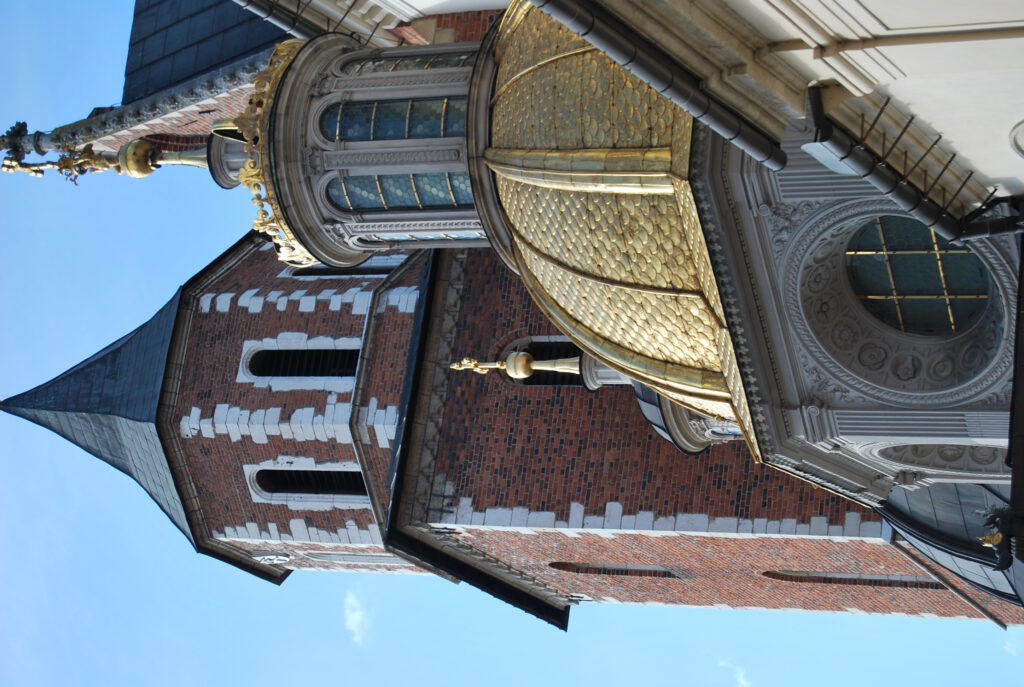
The Golden Dome of the Sigismund Chapel
After the First World War, when Poland regained its independence, a decision was made to restore the castle and prepare it as a future residence of the President of Poland. Although the seat of government remained in Warsaw, Wawel fulfilled this representative function until 1939, when the Second World War broke out and Cracow became the capital of the Nazi-occupied General Government.
On 6 September 1939, Governor-General Hans Frank made Wawel Castle his private residence. Despite widespread looting, the castle escaped major destruction. After the war, Wawel was restored once again, and many of its art collections and historical treasures returned – including the magnificent Flemish tapestries described elsewhere.
Today, Wawel Hill functions as a museum complex displaying some of the most valuable artefacts of Polish material culture. It remains a powerful symbol of continuity, identity, and memory.
Note: The tapestry exhibition can also be viewed online, without leaving home.


